Essential RV Maintenance Page

Protect Your Investment and Enjoy Worry-Free Adventures

Whether you're preparing for your very first camping trip or you're a seasoned RVer with thousands of miles behind you, one thing remains true—regular maintenance is the single best way to protect your RV and ensure years of safe, enjoyable adventures.

Unlike a traditional home, your RV is constantly exposed to harsh sunlight, heavy rain, freezing temperatures, road salt, dust, high winds, vibration, and miles of rough roads. Every trip places stress on your tires, suspension, roof, plumbing, electrical system, appliances, slide-outs, and countless seals designed to keep the elements outside where they belong.

The encouraging news is that most expensive RV repairs don't happen overnight. They usually begin as small, easily overlooked maintenance issues that could have been prevented with a simple inspection or routine service. A tiny crack in a roof seal can eventually lead to thousands of dollars in water damage. Underinflated tires can generate dangerous heat that results in a blowout. Neglected batteries gradually lose capacity until they fail when you need them most. Fortunately, these are the kinds of problems that a consistent maintenance routine is designed to catch before they become costly emergencies.

Whether you own a travel trailer, fifth wheel, toy hauler, motorhome, truck camper, or pop-up camper, developing good maintenance habits will help you:

  • Protect your investment by extending the life of your RV and its major systems.
  • Reduce unexpected repair costs by identifying small problems before they become major ones.
  • Travel with confidence knowing your RV has been properly inspected and prepared.
  • Improve safety for you, your family, and everyone else on the road.
  • Maintain resale value by keeping your RV in excellent condition with documented maintenance.
  • Spend more time enjoying your adventures instead of dealing with avoidable breakdowns.

At RV Basic Essentials, we believe RV maintenance shouldn't feel overwhelming. That's why we've created this comprehensive resource to bring together practical maintenance schedules, seasonal checklists, expert tips, product recommendations, and step-by-step guidance—all in one convenient place.

Whether you're preparing for a weekend getaway, a cross-country road trip, or placing your RV into seasonal storage, this guide will help you know exactly what to inspect, when to perform routine maintenance, and how to keep every major system operating at its best.

Contains Affiliate Links

RV LIFE Trip Wizard

What's Included in This Guide

To make finding the information you need as simple as possible, we've organized this guide into easy-to-follow sections covering every stage of RV ownership.

✔ Maintenance Schedules

Know what to inspect before every trip, monthly, seasonally, and annually to stay ahead of costly repairs.

✔ Seasonal Maintenance

Learn how your maintenance priorities change throughout the year, from spring de-winterization and summer heat management to fall inspections and winter storage preparation.

✔ System-by-System Care

Understand how to properly maintain your roof, tires, electrical system, plumbing, appliances, batteries, HVAC system, slide-outs, suspension, and more.

✔ Common Maintenance Mistakes

Discover the overlooked issues that often lead to expensive repairs—and how to avoid them.

✔ Recommended RV Products

Explore trusted tools, cleaners, protectants, replacement parts, and accessories that make maintaining your RV easier and more effective.

✔ Related RV Resources

Dive deeper into topics with our detailed articles on towing, power management, seasonal preparation, boondocking, organization, and more.


Your RV Deserves More Than Just Repairs—It Deserves Preventative Care

One of the biggest misconceptions among new RV owners is that maintenance only becomes important when something stops working. In reality, the opposite is true. The best-maintained RVs are rarely the ones that receive the most repairs—they're the ones whose owners consistently invest a little time in preventative care before problems have a chance to develop.

Think of every inspection, every seal check, every tire pressure adjustment, and every roof cleaning as an investment in your future adventures. The small amount of time you spend maintaining your RV today can save thousands of dollars in repair costs, prevent unexpected trip interruptions, and provide peace of mind every time you pull out of the driveway.

So grab your favorite beverage, bookmark this page, and let's build a maintenance routine that keeps your RV safe, reliable, and ready for wherever the road takes you next.

Why RV Maintenance Matters

Owning an RV is about freedom, adventure, and creating unforgettable memories—but it's also one of the largest investments many families will ever make outside of purchasing a home. Whether your RV cost $20,000 or well over $250,000, protecting that investment starts with one simple habit: preventative maintenance.

Unlike a stationary home, an RV is constantly moving, flexing, vibrating, and being exposed to the elements. Every mile traveled puts stress on the suspension, tires, wheel bearings, frame, appliances, plumbing, electrical system, and countless fasteners holding everything together. Add in months of sitting in storage, extreme temperatures, UV exposure, heavy rain, snow, humidity, and rough roads, and it's easy to see why regular inspections are so important.

The good news is that most major RV failures don't happen without warning. They usually begin with small issues that are inexpensive and easy to fix—if they're caught early.

A loose roof seal, a worn tire, a weak battery, or a small plumbing leak may not seem like a big deal today, but over time those seemingly minor problems can turn into repairs costing hundreds or even thousands of dollars.

The goal of preventative maintenance isn't to eliminate every repair—it's to dramatically reduce the chances of unexpected breakdowns and expensive surprises.


A Small Problem Today Can Become a Big Repair Tomorrow

One of the biggest lessons experienced RV owners learn is that waiting almost always costs more.

Consider these common examples:

A Cracked Roof Seal

A tiny crack around a roof vent or skylight may allow only a few drops of water inside after each rainstorm. You may never notice it until months later when the ceiling begins to discolor or walls become soft to the touch.

By then, water may have already damaged:

  • Roof decking
  • Insulation
  • Interior wall panels
  • Cabinetry
  • Flooring
  • Structural framing

What could have been fixed with a tube of self-leveling sealant and a few minutes of your time can quickly turn into one of the most expensive repairs an RV owner will ever face.


Underinflated Tires

Your tires are the only connection between your RV and the road.

Driving with improper tire pressure creates excess heat, uneven tread wear, reduced fuel economy, poor handling, and greatly increases the risk of a dangerous blowout.

Even worse, a blowout can cause extensive damage to:

  • Wheel wells
  • Plumbing
  • Wiring
  • Exterior siding
  • Storage compartments
  • Fenders

Five minutes with a quality tire gauge before each trip can save thousands of dollars—not to mention keeping your family safer while traveling.


Neglected Batteries

Whether your RV uses traditional lead-acid batteries or modern lithium batteries, they're the heart of your electrical system.

Ignoring battery maintenance can lead to:

  • Shortened battery life
  • Poor appliance performance
  • Charging issues
  • Unexpected power loss
  • Premature battery replacement

Regular inspections, proper charging, and understanding your RV's electrical system go a long way toward keeping everything running smoothly—especially if you enjoy boondocking or extended camping trips.


Water System Leaks

A loose fitting under the sink or a slow drip behind the water heater often goes unnoticed because it isn't visible during everyday use.

Over time, however, moisture can lead to:

  • Mold and mildew
  • Soft flooring
  • Cabinet damage
  • Delamination
  • Odors
  • Structural deterioration

Simply inspecting your plumbing connections a few times each season can help prevent these hidden problems from becoming major repairs.


Preventative Maintenance Saves More Than Money

While avoiding expensive repairs is certainly a major benefit, routine maintenance provides many other advantages that are just as valuable.

Greater Safety

A properly maintained RV is a safer RV.

Routine inspections help identify worn tires, loose suspension components, failing brakes, damaged propane lines, electrical issues, and deteriorating safety equipment before they put you or your family at risk.

Knowing your RV has been thoroughly inspected before every trip allows you to travel with confidence instead of wondering what might go wrong hundreds of miles from home.


More Reliable Adventures

Few things ruin a vacation faster than spending it waiting for roadside assistance or sitting at a repair shop.

Preventative maintenance dramatically reduces the likelihood of unexpected breakdowns, allowing you to spend your time exploring national parks, relaxing around the campfire, and making memories—not troubleshooting preventable problems.


Higher Resale Value

Whether you plan to keep your RV for decades or eventually upgrade to something new, maintenance pays dividends when it's time to sell.

Prospective buyers are far more confident purchasing an RV that shows evidence of regular care and documented maintenance.

Simple things like:

  • Clean roof seals
  • Well-maintained tires
  • Serviced bearings
  • Clean battery terminals
  • Organized maintenance records

can help your RV stand out from others on the market.


Longer Equipment Life

Every component on your RV has an expected lifespan.

Routine maintenance helps maximize that lifespan by reducing unnecessary wear and catching issues before they affect surrounding systems.

Your roof, air conditioner, refrigerator, water heater, furnace, batteries, suspension, plumbing fixtures, seals, and slide-outs will all perform better—and often last significantly longer—when they're maintained consistently.


Maintenance Doesn't Have to Be Overwhelming

One of the biggest misconceptions among new RV owners is believing they need to become a certified technician overnight.

The reality is that most routine maintenance involves simple inspections that anyone can perform with a little guidance.

Tasks like:

  • Checking tire pressure
  • Inspecting roof seals
  • Cleaning your RV roof
  • Testing safety detectors
  • Lubricating slide seals
  • Sanitizing your fresh water system
  • Exercising your generator
  • Inspecting your awning
  • Monitoring battery voltage

can all become part of a simple routine that takes only a small amount of time throughout the year.

As your confidence grows, you'll likely find yourself tackling even more maintenance projects, saving money while gaining a better understanding of how your RV operates.


Build a Routine, Not Just a Repair List

The most experienced RV owners don't wait for something to break before opening their toolbox.

Instead, they develop a maintenance routine that becomes part of every camping season.

A quick inspection before each trip.

A monthly walk-around.

Seasonal deep cleaning.

Annual servicing of major components.

These small habits not only reduce repair costs but also provide peace of mind every time you pull onto the highway.

Remember, your RV was built to create adventures—not unexpected repair bills. Investing a little time in preventative maintenance today means more weekends at your favorite campground, fewer surprises on the road, and many more years of enjoying the RV lifestyle.


Coming Up Next: Your Complete RV Maintenance Timeline

Now that you understand why preventative maintenance is so important, the next step is knowing exactly what to inspect and when.

In the next section, we'll break maintenance down into simple, manageable schedules—including before every trip, monthly, seasonal, and annual maintenance checklists—so you'll always know what needs your attention before hitting the road.


Your Complete RV Maintenance Timeline

One of the easiest ways to stay on top of RV maintenance is to stop thinking of it as one large project. Instead, break it into smaller routines throughout the year.

Some maintenance items should be completed before every trip, while others only need attention monthly, seasonally, or once a year. By following a schedule, you'll reduce the chances of forgetting important inspections and greatly decrease the likelihood of costly repairs.

Think of this timeline as your roadmap for keeping your RV safe, reliable, and adventure-ready.


Before Every Trip

(15–30 Minutes | Difficulty: Easy)

Every trip begins long before you leave the driveway. A quick walk-around inspection can uncover problems that may have developed since your last outing or while your RV was in storage.

Spending just a few minutes checking critical systems before each departure can prevent breakdowns, improve safety, and provide peace of mind once you're on the road.


✔ Check Tire Pressure and Tire Condition

Why it's important

Your tires carry thousands of pounds and are your RV's only connection to the road. Underinflated or damaged tires are one of the leading causes of RV blowouts.

Inspect for:

  • Proper inflation (always check when tires are cold)
  • Cracks or weather checking
  • Nails or punctures
  • Uneven tread wear
  • Bulges in the sidewall
  • Tire age (replace aging tires even if tread looks good)

Time Required: 5 minutes

Recommended Products

• Quality Tire Pressure Gauge

• Portable Air Compressor

• TPMS (Tire Pressure Monitoring System)


✔ Inspect Hitch Components

Whether towing a travel trailer or fifth wheel, every hitch component deserves a quick inspection.

Check:

  • Hitch ball or king pin
  • Coupler latch
  • Safety chains
  • Breakaway cable
  • Weight distribution bars
  • Sway control components
  • Hitch pins and retaining clips
  • Electrical connector

A loose hitch component discovered in your driveway is far better than discovering it on the interstate.

Time Required: 5 minutes

Learn More → Complete RV Towing Guide


✔ Test Exterior Lights

Walk around the RV and verify:

  • Brake lights
  • Running lights
  • Turn signals
  • Reverse lights
  • Clearance lights
  • License plate lights

Lighting problems are often caused by loose connectors or corrosion and are usually simple to fix before your trip begins.


✔ Check Battery Condition

Whether you have lead-acid or lithium batteries, make sure they're ready for your adventure.

Inspect:

  • Battery voltage
  • Terminal corrosion
  • Secure mounting
  • Battery monitor readings
  • Charging status

If using lead-acid batteries:

✔ Check electrolyte levels (if applicable).

If using lithium batteries:

✔ Verify your battery monitor shows a healthy charge.

Related Reading

➡ Complete RV Power Guide


✔ Verify Shore Power Equipment

Before leaving home, inspect:

  • Power cord
  • Surge protector
  • Dogbone adapters
  • Extension cords
  • Plug ends

Look for:

  • Burn marks
  • Loose connections
  • Bent prongs
  • Cracked insulation

Replacing a worn adapter costs far less than replacing damaged electrical components.


✔ Inspect Your Roof (Ground Level First)

You don't necessarily need to climb onto the roof before every trip, but take a moment to look for:

  • Loose sealant
  • Tree damage
  • Torn vent covers
  • Lifted lap sealant
  • Missing antenna parts

If something looks questionable, perform a closer inspection before leaving.


✔ Test Safety Equipment

Press the test buttons on:

  • Smoke detector
  • Carbon monoxide detector
  • LP gas detector

Also verify:

  • Fire extinguisher pressure gauge
  • Emergency exit windows operate properly

These checks take less than two minutes but could save lives.


✔ Check Propane System

Verify:

  • Tank levels
  • Valve operation
  • Regulator condition
  • Hose condition

If you smell propane at any time:

Do not travel until the source has been identified and repaired.


✔ Inspect Water Connections

Check for:

  • Loose fittings
  • Water leaks
  • Cracked hoses
  • Damaged water pressure regulator
  • Water filter condition

If your RV has been sitting for several weeks, run water through each faucet before your trip.


✔ Walk Around One Last Time

This final inspection catches many of the little things that are easy to overlook.

Make sure:

✔ Steps are retracted

✔ TV antenna is down

✔ Roof vents are closed

✔ Windows are latched

✔ Storage compartments are locked

✔ Slide-outs are fully retracted

✔ Stabilizer jacks are raised

✔ Chocks removed

✔ Entry door locked

✔ Tow mirrors adjusted

Many experienced RVers make this final walk-around a habit before every departure.


Monthly Maintenance

(30–60 Minutes | Difficulty: Easy)

Even if you're not traveling every month, your RV still benefits from regular attention. Monthly maintenance helps identify small issues before they become larger problems and keeps important systems functioning properly during periods of storage.


✔ Inspect Roof Seals and Exterior Caulking

One of the most important maintenance tasks you can perform is checking every roof penetration and exterior seam.

Inspect around:

  • Skylights
  • Roof vents
  • Plumbing vents
  • Air conditioner
  • Solar panel mounts
  • Ladder mounts
  • Sidewall trim
  • Windows
  • Marker lights

Look for:

  • Cracks
  • Gaps
  • Peeling sealant
  • Loose trim

Repairing a small section of sealant now can prevent thousands of dollars in water damage later.


✔ Exercise Your Generator

If equipped with a generator, run it under load for 30–60 minutes each month.

This helps:

  • Circulate oil
  • Prevent carburetor problems
  • Remove moisture
  • Keep seals lubricated
  • Ensure reliable operation

Running the generator with the air conditioner or another heavy electrical load provides the best exercise.


✔ Clean or Replace HVAC Filters

Dirty filters reduce airflow, decrease cooling efficiency, and make your air conditioner work harder than necessary.

Clean reusable filters or replace disposable filters according to the manufacturer's recommendations.


✔ Lubricate Slide-Out Seals

Use a manufacturer-approved conditioner on slide seals.

Benefits include:

  • Prevent cracking
  • Reduce sticking
  • Improve sealing
  • Extend seal life

Avoid petroleum-based products unless specifically recommended by the manufacturer.


✔ Inspect Batteries

Take a few minutes to verify:

  • Voltage
  • Charging performance
  • Cable tightness
  • Corrosion
  • Battery compartment cleanliness

For lead-acid batteries, inspect electrolyte levels if your batteries are serviceable.


✔ Check Plumbing for Hidden Leaks

Open cabinets and inspect under:

  • Kitchen sink
  • Bathroom sink
  • Toilet
  • Water heater
  • Water pump

Look for:

  • Damp wood
  • Water stains
  • Mold
  • Loose fittings

Even a slow drip can cause significant damage over time.


✔ Exercise Appliances

Run each appliance periodically, even if you're not camping.

This includes:

  • Refrigerator
  • Furnace
  • Water heater
  • Air conditioner
  • Microwave
  • Stove
  • Exhaust fans

Operating appliances regularly helps identify problems before your next trip and keeps moving parts functioning properly.


✔ Wash Your RV

A clean RV isn't just about appearance.

Regular washing removes:

  • Road grime
  • Tree sap
  • Bird droppings
  • Bug residue
  • Salt
  • Pollutants

These contaminants can damage finishes, accelerate corrosion, and shorten the life of seals and decals if left in place.


✔ Check Awning Fabric and Hardware

Inspect the awning for:

  • Tears or pinholes
  • Mold or mildew
  • Loose mounting bolts
  • Smooth extension and retraction
  • Proper tension

Cleaning and inspecting your awning regularly helps prevent unexpected failures at the campsite.


✔ Treat Holding Tanks

Use a quality holding tank treatment after dumping your black and gray tanks.

Proper tank maintenance helps:

  • Control odors
  • Break down waste
  • Keep sensors cleaner
  • Improve overall tank performance

Remember, plenty of water is your black tank's best friend. Resist the urge to leave the dump valve open while connected to full hookups—allowing the tank to fill before dumping helps flush solids more effectively and reduces the chance of clogs or the dreaded "pyramid plug."


Every Six Months

(2–4 Hours | Difficulty: Easy to Moderate)

Not every maintenance task needs to be completed before every trip, but there are several important inspections and service items that should be performed at least twice a year. These tasks help protect your RV from long-term wear, weather damage, and unexpected equipment failures.

A great time to complete your six-month maintenance is at the beginning and end of your primary camping season.


✔ Thoroughly Clean and Inspect Your Roof

Your RV roof is one of the hardest-working parts of your RV, yet it's often the most neglected.

A clean roof allows you to spot small problems before they become major leaks.

Wash your roof using a cleaner approved for your roof material (rubber, TPO, fiberglass, or aluminum), then carefully inspect every seam, vent, skylight, antenna, ladder mount, and air conditioner gasket.

Look for:

  • Cracked lap sealant
  • Loose screws
  • Torn vent covers
  • Soft spots
  • Pooling water
  • UV damage
  • Damaged roof accessories

Don't forget to inspect the transition where the roof meets the sidewalls.

Time Required: 45–60 minutes

Recommended Products

• RV Roof Cleaner

• Dicor Self-Leveling Lap Sealant

• Soft Wash Brush

• Microfiber Towels

Related Reading

➡ Spring RV Cleaning & Maintenance Guide


✔ Wash, Wax, and Protect the Exterior

The exterior of your RV is constantly exposed to UV rays, bugs, road grime, bird droppings, tree sap, and pollution.

Applying a quality wax or protectant helps preserve:

  • Paint
  • Fiberglass
  • Gel coat
  • Graphics
  • Decals
  • Exterior trim

Regular protection also makes future cleanings much easier.

Pay extra attention around decals, where oxidation often begins.


✔ Inspect Every Exterior Seal

While your monthly inspections focus on identifying obvious issues, your six-month inspection should be much more detailed.

Inspect around:

  • Windows
  • Entry doors
  • Storage compartments
  • Exterior lighting
  • Utility hookups
  • Slide-outs
  • Moldings
  • Corner trim

Gently press around seals to check for movement or separation.

Replace damaged caulking before moisture has an opportunity to enter.


✔ Sanitize the Fresh Water System

Even if your drinking water appears clean, bacteria and biofilm can develop inside your fresh water tank and plumbing during storage.

Sanitizing your system helps eliminate:

  • Bacteria
  • Mold
  • Algae
  • Odors
  • Biofilm buildup

Flush the system thoroughly after sanitizing and consider replacing your inline water filter if it's nearing the end of its service life.

Recommended Products

• Fresh Water Sanitizer

• Glacier Fresh Water Filter

• Water Pressure Regulator


✔ Flush the Water Heater

Sediment naturally builds up inside your water heater over time, especially if you frequently camp in areas with hard water.

Flushing the tank improves heating efficiency and helps extend the life of the water heater.

If your RV has a Suburban water heater, inspect the anode rod while flushing the tank and replace it if it's significantly deteriorated.

For Atwood water heaters, inspect the drain plug and clean any debris from the tank.


✔ Inspect Your Suspension

Road vibration affects every suspension component.

Inspect:

  • Leaf springs
  • Equalizers
  • Shackles
  • Wet bolts
  • Bushings
  • U-bolts
  • Axle alignment
  • Shock absorbers (if equipped)

Look for:

  • Rust
  • Elongated holes
  • Broken springs
  • Loose hardware
  • Excessive wear

These inspections become even more important if you regularly travel rough roads or carry heavy loads.


✔ Inspect Brakes and Brake Wiring

Proper braking is critical for safe towing.

Look for:

  • Damaged wiring
  • Loose brake magnets
  • Frayed cables
  • Worn brake components
  • Corrosion

If you notice reduced braking performance or unusual noises, schedule a professional brake inspection before your next trip.


✔ Lubricate Moving Components

Many RV owners remember slide-outs but overlook other moving parts.

Lubricate as recommended by the manufacturer:

  • Stabilizer jacks
  • Tongue jack
  • Landing gear
  • Hitch components
  • Entry steps
  • Cargo door hinges
  • Latches
  • Locks

Use the correct lubricant for each application—avoid applying grease or oil where dry lubricants are recommended.


✔ Deep Clean Appliances

Twice a year, give your appliances a more thorough inspection and cleaning.

This includes:

Refrigerator

  • Clean exterior vents
  • Remove dust behind access panels
  • Inspect burner area (absorption models)

Air Conditioner

  • Clean evaporator and condenser coils (if accessible)
  • Check drain channels
  • Inspect shroud for cracks

Furnace

  • Clean intake and exhaust vents
  • Remove debris from around the unit

Range Hood

  • Clean grease filters

Small maintenance tasks like these improve efficiency and extend appliance life.


✔ Inspect Your Safety Equipment

Replace batteries if needed and verify proper operation of:

  • Smoke detector
  • Carbon monoxide detector
  • Propane detector
  • Fire extinguisher
  • Emergency flashlights

Also confirm that your emergency roadside kit is fully stocked.


Annual Maintenance

(One Full Day or Scheduled Service | Difficulty: Moderate to Advanced)

Some maintenance tasks require more time, specialized tools, or professional service. Completing these items once each year helps keep your RV performing at its best while reducing long-term repair costs.

Many RV owners schedule annual maintenance during the off-season or just before the busiest camping months begin.


✔ Service Wheel Bearings (Towable RVs)

Wheel bearings support thousands of pounds every mile you travel.

Over time, grease breaks down and contaminants can enter the bearings.

Annual bearing service typically includes:

  • Cleaning bearings
  • Inspecting races
  • Repacking with fresh grease
  • Replacing seals
  • Reassembling and adjusting bearing preload

Ignoring wheel bearings can eventually lead to overheating, bearing failure, or even wheel separation.

If you're not comfortable performing this service yourself, it's an excellent job to have completed by a qualified RV technician.


✔ Complete Brake Inspection

Even if your brakes appeared fine during your six-month inspection, an annual inspection should be more comprehensive.

Inspect:

  • Brake shoes
  • Magnets
  • Drums
  • Wiring
  • Breakaway switch
  • Brake controller adjustment

Motorhome owners should also inspect hydraulic brake components according to the chassis manufacturer's recommendations.


✔ Inspect and Torque Lug Nuts

Loose lug nuts are more common than many RV owners realize, particularly after wheel removal or bearing service.

Always torque lug nuts to the manufacturer's specifications using a calibrated torque wrench.

Never rely solely on an impact wrench.


✔ Inspect and Replace Roof Sealant as Needed

While sealant should be inspected throughout the year, annual maintenance is the perfect time to remove failed sections and apply fresh sealant where necessary.

Properly maintained roof seals remain one of the best defenses against water intrusion.


✔ Service Your Air Conditioner

A yearly AC service helps maximize cooling performance during the hottest camping months.

Tasks include:

  • Cleaning coils
  • Tightening electrical connections
  • Inspecting capacitors
  • Cleaning condensate drains
  • Inspecting mounting bolts and roof gasket compression

✔ Inspect Your Propane System

Propane leaks are serious safety hazards.

Have your propane system professionally leak-tested if:

  • Your RV is older.
  • Components have been replaced.
  • You smell propane.
  • You experience appliance performance issues.

Also inspect regulator vents and flexible propane hoses for cracks or deterioration.


✔ Review Tire Age

Tread depth isn't the only factor that determines when tires should be replaced.

Locate the DOT date code on each tire and determine its age.

Even tires that appear to have excellent tread can become unsafe as rubber ages.

Also inspect:

  • Valve stems
  • Metal valve caps
  • Wheel condition

✔ Review Battery Performance

Evaluate your batteries before another camping season begins.

Ask yourself:

  • Are they charging properly?
  • Has capacity noticeably decreased?
  • Do you still meet your camping power needs?

If you've been considering upgrading from lead-acid batteries to lithium, your annual maintenance period is an ideal time to make the transition.

Related Reading

➡ Complete RV Power Guide


✔ Update Your Maintenance Records

One of the most overlooked maintenance tasks doesn't involve tools at all.

Keep a written or digital record of:

  • Service dates
  • Repairs
  • Tire replacements
  • Battery installations
  • Appliance maintenance
  • Bearing service
  • Roof inspections
  • Winterization
  • Warranty work

Accurate maintenance records help you stay organized, simplify troubleshooting, and can add value if you decide to sell your RV in the future.


✔ Schedule Professional Inspections When Needed

Even experienced DIY RV owners benefit from periodic professional inspections.

Consider scheduling inspections for:

  • Suspension alignment
  • Brake systems
  • Propane leak testing
  • Roof moisture testing
  • Slide-out adjustments
  • Chassis service (motorhomes)
  • Engine and transmission service (motorhomes)

Professional inspections often identify developing issues before they become expensive repairs.


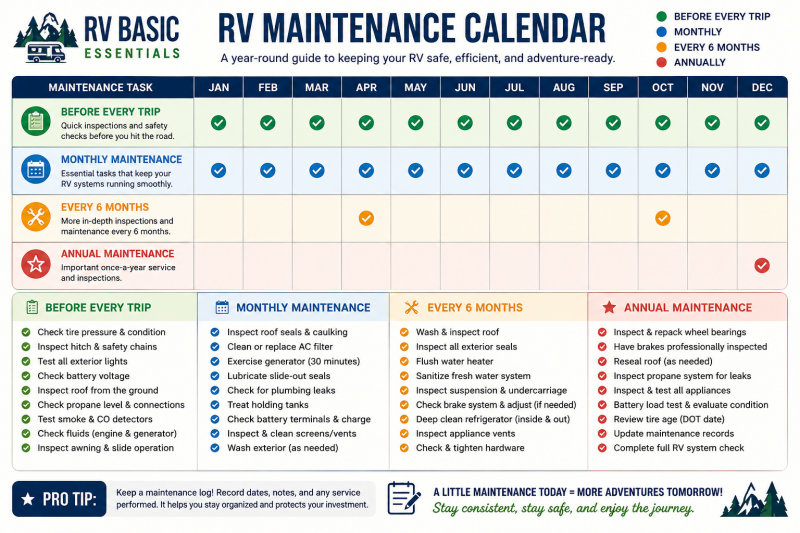
Pro Tip: Build Maintenance Into Your Camping Calendar

One of the easiest ways to stay consistent is to schedule maintenance just like you schedule camping trips.

For example:

  • Early Spring: De-winterize, sanitize the water system, inspect the roof, service batteries, and prepare for camping season.
  • Mid-Summer: Wash and protect the exterior, inspect tires and suspension, check roof sealant, and service the air conditioner.
  • Early Fall: Inspect seals, test the furnace, service the water heater, and prepare for cooler temperatures.
  • Late Fall/Winter: Winterize the plumbing system, care for batteries, control moisture, and protect your RV during storage.

By spreading maintenance throughout the year, each session becomes manageable, and you'll dramatically reduce the chance of major repairs interrupting your travels.


Easy to follow Maintenance Calendar!

Seasonal RV Maintenance

Keep Your RV Ready for Every Adventure—No Matter the Season

Just as the seasons change, so do your RV's maintenance needs.

Preparing for a summer road trip looks very different from getting your RV ready for winter storage, and failing to adjust your maintenance routine throughout the year can lead to unnecessary wear, reduced performance, and expensive repairs.

By breaking your maintenance into seasonal tasks, you'll stay ahead of changing weather conditions, protect your RV's major systems, and spend more time enjoying your travels instead of fixing preventable problems.

Whether you camp year-round or only during certain months, using the following seasonal maintenance guide will help ensure your RV is always prepared for whatever lies ahead.


🌸 Spring RV Maintenance

Wake Your RV Up After Winter Storage

For many RV owners, spring marks the beginning of camping season. After months of sitting in storage, your RV deserves a thorough inspection before hitting the road.

Cold temperatures, moisture, rodents, and inactivity can all take their toll during the off-season, making spring one of the most important maintenance periods of the year.

Think of this as giving your RV a complete health check before another season of adventure.


De-Winterize Your Plumbing System

If your RV was properly winterized, your first priority is safely returning the plumbing system to service.

Your spring checklist should include:

✔ Flush all antifreeze from the plumbing system

✔ Reinstall any water filters removed during winterization

✔ Inspect all water lines for leaks

✔ Test the water pump

✔ Fill and flush the fresh water tank

✔ Sanitize the entire water system

✔ Inspect the water heater before operation

Take your time during this process. A loose fitting discovered now is much easier to fix than one found after water has damaged your cabinets or flooring.


Inspect the Roof Thoroughly

Winter weather can be surprisingly hard on RV roofs.

Snow loads, freezing temperatures, falling branches, and months of exposure to the elements can weaken sealants and create new entry points for water.

Inspect:

  • Roof membrane
  • Skylights
  • Plumbing vents
  • Air conditioner gasket
  • Antennas
  • Solar panels
  • Ladder mounts
  • Sealant around every roof penetration

Repair any damaged sealant immediately before spring rains have an opportunity to cause water intrusion.


Inspect Every Exterior Seal

Don't stop with the roof.

Walk completely around your RV inspecting:

  • Windows
  • Entry doors
  • Storage doors
  • Exterior lighting
  • Utility connections
  • Corner trim
  • Slide-out seals

Small gaps often appear after temperature swings during the winter.


Wash and Protect the Exterior

Winter grime, oxidation, and road dust should all be removed before camping season begins.

A complete wash allows you to inspect:

  • Decals
  • Fiberglass
  • Paint
  • Graphics
  • Moldings
  • Exterior accessories

After cleaning, apply a quality protectant or wax to help shield your RV from the stronger UV rays of spring and summer.


Inspect Tires

Even if your RV never moved during winter storage, tires continue aging.

Inspect for:

  • Proper inflation
  • Sidewall cracking
  • Flat spots
  • Dry rot
  • Uneven wear
  • Tire age

Don't forget to inspect the spare tire as well.


Service the Batteries

Reconnect batteries if removed for storage.

Then inspect:

  • Voltage
  • Charging performance
  • Corrosion
  • Cable connections
  • Battery monitor readings

If using lead-acid batteries, verify electrolyte levels before charging.


Test Every Appliance

Run every major appliance before your first camping trip.

This includes:

  • Air conditioner
  • Furnace
  • Refrigerator
  • Water heater
  • Microwave
  • Stove
  • Vent fans

Finding problems in your driveway is always preferable to discovering them at the campground.


Inspect Safety Equipment

Spring is the perfect time to verify:

  • Smoke detector
  • Carbon monoxide detector
  • LP detector
  • Fire extinguisher
  • First aid kit
  • Emergency roadside kit

Replace batteries where needed.


Related Resources

➡ Spring Cleaning & Maintenance Guide

➡ Complete RV Power Guide

➡ RV Packing Essentials


☀️ Summer RV Maintenance

Protect Your RV During Peak Camping Season

Summer is when most RVs accumulate the greatest number of miles—and endure the toughest environmental conditions.

Extended sunlight, extreme temperatures, crowded highways, dusty campsites, and frequent travel all place additional stress on your RV.

Regular inspections throughout the summer help prevent heat-related failures and keep your RV operating efficiently during your busiest camping months.


Watch Tire Pressures Closely

As outside temperatures increase, so does tire pressure.

Check pressures before every travel day while tires are cold.

Never adjust pressures immediately after driving.

Inspect frequently for:

  • Uneven wear
  • Embedded debris
  • Cuts
  • Heat damage

Summer travel often means longer driving days, making tire maintenance even more critical.


Help Your Air Conditioner Work Smarter

Your air conditioner may run for hours at a time during summer.

Improve efficiency by:

  • Cleaning filters monthly
  • Keeping return vents clear
  • Parking in shade whenever possible
  • Using reflective window coverings
  • Closing blinds during the hottest part of the day
  • Using roof vents during cooler mornings

These simple habits reduce strain on the AC while keeping your RV more comfortable.


Manage Heat Around Your Batteries

High temperatures shorten battery life.

Inspect battery compartments regularly for:

  • Excessive heat
  • Swelling
  • Corrosion
  • Loose cables

If you rely on lithium batteries or solar power, monitor battery temperatures during prolonged periods of extreme heat.


Protect Against UV Damage

The sun is constantly attacking:

  • Roof membrane
  • Decals
  • Plastic vent covers
  • Slide toppers
  • Tires
  • Exterior seals

Wash your RV regularly and apply UV protectants according to the manufacturer's recommendations.


Keep Your Water System Healthy

Hot weather encourages bacteria and algae growth.

Flush hoses before connecting.

Inspect water filters.

Never allow drinking water hoses to sit full of stagnant water for extended periods.


Inspect Roof Sealant More Frequently

Summer heat causes roof materials to expand and contract.

Quick monthly inspections can catch sealant failures before late summer thunderstorms create leaks.


Related Resources

➡ Beating the Summer Heat in Your RV

➡ Complete RV Power Guide

➡ Portable Power Solutions


🍂 Fall RV Maintenance

Prepare Your RV for Cooler Weather

As camping season begins winding down, fall is the perfect opportunity to address wear accumulated during the busy summer months.

Even if you continue camping into the cooler months, fall maintenance helps prepare your RV for changing weather and prevents small issues from becoming larger problems over the winter.


Inspect Roof and Exterior Seals

Remove leaves and debris before moisture becomes trapped around roof accessories.

Closely inspect all sealants before freezing temperatures arrive.


Test Your Furnace

Don't wait until your first cold camping trip.

Operate the furnace early in the season.

Inspect:

  • Burner operation
  • Airflow
  • Thermostat
  • Exterior exhaust

Clean intake and exhaust vents.


Flush the Water Heater

Removing sediment before winter storage helps improve efficiency while reducing corrosion.

Replace the anode rod if necessary.


Clean and Inspect Your Awning

Before storing your awning for the season:

  • Wash thoroughly
  • Allow it to dry completely
  • Inspect for tears
  • Check mounting hardware

Never store an awning while it's wet.


Evaluate Your Camping Equipment

Fall is a great time to inspect:

  • Sewer hoses
  • Fresh water hoses
  • Power cords
  • Leveling blocks
  • Chocks
  • Camp chairs
  • Outdoor rugs

Replace worn items now rather than next spring.


Related Resources

➡ Complete RV Maintenance Timeline

➡ RV Storage Tips


❄️ Winter RV Maintenance

Protect Your RV During the Off-Season

Winter storage doesn't mean maintenance stops.

In many ways, winter maintenance is about preventing damage while your RV sits unused.

A properly winterized RV is far less likely to suffer expensive plumbing failures, moisture damage, battery problems, or pest infestations.


Winterize the Plumbing System

If freezing temperatures are expected:

✔ Drain all water systems.

✔ Bypass the water heater.

✔ Add RV antifreeze where required.

✔ Protect P-traps.

✔ Empty holding tanks.

Taking shortcuts during winterization can result in burst pipes, cracked fittings, and expensive spring repairs.


Protect the Batteries

Depending on your battery type:

  • Disconnect batteries
  • Maintain charge levels
  • Use an approved smart charger if needed
  • Store removable batteries according to the manufacturer's recommendations

Avoid allowing batteries to remain fully discharged throughout the winter.


Prevent Moisture Damage

Condensation is one of the biggest threats during storage.

Reduce humidity by:

  • Ventilating when possible
  • Using moisture absorbers
  • Removing damp fabrics
  • Periodically inspecting the interior

Check cabinets and closets where moisture often collects unnoticed.


Protect Against Rodents

Before storage:

Seal potential entry points.

Remove all food.

Vacuum thoroughly.

Inspect periodically for signs of nesting.

Rodents can cause extensive damage by chewing wiring, plumbing, insulation, and upholstery.


Cover and Inspect

If using an RV cover:

Ensure it fits properly.

Avoid excessive rubbing against corners.

Inspect the RV periodically throughout the winter, especially after heavy snow or windstorms.

Even while stored, your RV benefits from occasional walk-around inspections.


Related Resources

➡ Complete Winterization Guide

➡ Moisture Control for RVs

➡ Off-Season RV Upgrade Ideas


Maintenance Never Ends—And That's a Good Thing

RV maintenance isn't something you complete once and forget about. It's an ongoing routine that changes with the seasons, your travel habits, and the environments you explore.

By developing seasonal maintenance habits, you'll spend less time worrying about unexpected repairs and more time doing what your RV was built for—creating unforgettable adventures.


The 10 Most Common RV Maintenance Mistakes (And How to Avoid Them)

Even experienced RV owners occasionally overlook simple maintenance tasks. Unfortunately, many of the most expensive repairs start with small mistakes that seemed harmless at the time. Here are some of the most common maintenance oversights—and how to avoid them.


❌ Waiting Until Something Breaks

The biggest mistake isn't forgetting a specific maintenance task—it's assuming maintenance can wait until there's a problem.

By the time you notice a leak, hear an unusual noise, or lose power, the underlying issue has often been developing for weeks or months.

Better Approach: Spend a few minutes inspecting your RV before every trip and follow a consistent maintenance schedule throughout the year.


❌ Ignoring Roof Seal Inspections

A tiny crack in roof sealant may not seem urgent, but water intrusion is one of the leading causes of major RV repairs.

Even a small leak can damage insulation, walls, flooring, and cabinetry long before visible signs appear inside the RV.

Better Approach: Inspect your roof at least monthly and after severe storms, replacing damaged sealant as needed.


❌ Forgetting Tire Age

Many RV owners only look at tread depth.

The truth is that tires often age out before they wear out.

Heat, UV exposure, and time all weaken the rubber, even if your RV has been sitting in storage.

Better Approach: Learn how to read your tire's DOT date code and inspect your tires regularly for cracks, bulges, and uneven wear.


❌ Traveling With Incorrect Tire Pressure

Overinflated or underinflated tires can reduce handling, increase wear, and significantly raise the risk of a blowout.

Better Approach: Check tire pressure before every travel day while the tires are cold.


❌ Leaving the Black Tank Valve Open

It may seem convenient while connected to full hookups, but leaving the valve open allows liquids to drain away while solids remain behind, eventually creating clogs and unpleasant odors.

Better Approach: Keep the valve closed until the tank is at least two-thirds full, then dump and flush thoroughly. Always use plenty of water and a quality tank treatment after dumping.


❌ Forgetting About the Batteries

Batteries slowly deteriorate when left discharged or improperly maintained.

Whether you use lead-acid or lithium batteries, neglect can significantly shorten their lifespan.

Better Approach: Monitor battery voltage regularly, keep terminals clean, and charge batteries according to the manufacturer's recommendations.


❌ Skipping Water Heater Maintenance

Sediment buildup reduces efficiency and can shorten the life of your water heater.

Many RV owners don't inspect the anode rod until it has completely deteriorated.

Better Approach: Flush the tank annually and inspect the anode rod (if equipped).


❌ Ignoring Small Water Leaks

A tiny drip under the sink can quietly damage cabinets, flooring, and insulation over time.

Better Approach: Periodically inspect plumbing connections throughout the RV and repair leaks immediately.


❌ Not Exercising the Generator

Generators that sit unused for months often develop carburetor issues and become unreliable when you need them most.

Better Approach: Run the generator under load for 30 to 60 minutes every month.


❌ Forgetting the Final Walk-Around

Many RV mishaps happen because of simple oversights—steps left out, storage doors unlatched, antennas still raised, or wheel chocks left in place.

Better Approach: Develop a consistent departure routine and always perform one final walk-around before pulling away.


Ready to Take the Guesswork Out of RV Maintenance?

If you've made it this far, you've already taken an important step toward protecting one of your biggest investments. But let's be honest—remembering every maintenance task, inspection interval, and seasonal service item can be challenging, especially when you're focused on planning your next adventure.

That's exactly why I'm creating a New and Improved RV Essential Maintenance Guide!

Instead of searching through multiple articles or trying to remember what needs attention next, you'll have everything organized into one easy-to-follow resource that you can reference year after year.

Inside the Complete Guide You'll Get:

✅ Comprehensive system-by-system maintenance procedures

✅ Detailed step-by-step instructions

✅ Printable maintenance logs

✅ Seasonal maintenance planners

✅ Interactive maintenance calendar

✅ Inspection worksheets

✅ Maintenance record pages

✅ Torque specifications and service reminders

✅ Product recommendations

✅ QR codes linking to helpful videos and tutorials

✅ Maintenance schedules you can customize to your camping style

Whether you're a brand-new RV owner or have years of camping experience, the guide is being designed to help you stay organized, prevent expensive repairs, and spend more time enjoying your adventures.

👉 Protect your investment. Travel with confidence. Make maintenance one less thing to worry about.

Stay tuned for updates and launch date coming soon!

Continue Your RV Maintenance Journey

Related RV Maintenance Resources

Routine maintenance is just one piece of the puzzle when it comes to protecting your RV and enjoying stress-free adventures. Throughout RV Basic Essentials, we've created in-depth guides that explore many of the topics introduced on this page in much greater detail.

Whether you're preparing for your next camping trip, upgrading your RV's electrical system, learning to tow with confidence, or getting ready for changing seasons, these resources will help you become a more knowledgeable and confident RV owner.

Explore our most popular maintenance and ownership guides below.


🌞 Beating the Summer Heat: Keeping Your RV Cool Without Overworking Your AC

High temperatures can affect far more than your comfort. Summer heat impacts your air conditioner, batteries, tire pressures, refrigerator performance, and even your RV's electrical system.

Learn practical ways to stay comfortable while reducing strain on your equipment, improving energy efficiency, and preventing heat-related maintenance issues.

Perfect for: Summer travelers, boondockers, and anyone camping in hot climates.

👉 Read the Complete Summer Heat Guide


⚡ The Complete Guide to RV Power

Understanding your RV's electrical system is one of the most valuable skills any RV owner can develop.

Whether you're learning the difference between 30-amp and 50-amp service, upgrading to lithium batteries, adding solar panels, choosing a surge protector, or selecting the right portable power station, this comprehensive guide explains everything in beginner-friendly terms.

Perfect for: New RV owners, off-grid campers, and anyone considering electrical upgrades.

👉 Explore the RV Power Guide


🧹 Spring RV Cleaning & Maintenance Guide

Spring is the perfect time to give your RV a fresh start after months of storage.

This detailed guide walks you through washing your RV, inspecting seals, sanitizing your plumbing system, checking tires, servicing batteries, testing appliances, and preparing for another season of adventure.

Perfect for: Beginning-of-season maintenance and annual inspections.

👉 Read the Spring Maintenance Guide


🚛 RV Towing for Beginners

Proper towing maintenance goes far beyond simply hooking up your trailer.

Learn how to inspect your hitch, adjust weight distribution, check tire pressures, understand tongue weight, inspect suspension components, and tow safely and confidently every time you hit the road.

Perfect for: Travel trailer and fifth-wheel owners.

👉 Read the Complete Towing Guide


🏕️ The Complete Guide to Boondocking

Camping without hookups places additional demands on your batteries, water system, waste tanks, and electrical equipment.

This guide covers everything from conserving water and managing power to choosing campsites and maintaining your RV while enjoying off-grid adventures.

Perfect for: Anyone interested in dispersed camping, Harvest Hosts, or extended off-grid stays.

👉 Explore the Boondocking Guide


💧 Controlling Moisture Inside Your RV

Moisture is one of the most overlooked threats to an RV.

Learn how condensation develops, why mold forms so easily inside RVs, and practical ways to control humidity throughout every season.

Perfect for: Full-time RVers, winter campers, and long-term storage.

👉 Read the Moisture Control Guide


📦 RV Organization Tips That Make Every Trip Easier

A well-organized RV isn't just more enjoyable—it's easier to maintain.

Discover storage solutions, organization hacks, decluttering strategies, and space-saving ideas that simplify maintenance and help prevent unnecessary wear on your belongings.

Perfect for: New RV owners and anyone looking to maximize limited storage space.

👉 Explore RV Organization Tips


❄️ Complete RV Winterization Guide

Protecting your RV during freezing temperatures is one of the most important maintenance tasks you'll perform each year.

Our winterization guide walks you through draining the plumbing system, protecting your water heater, caring for batteries, preventing moisture buildup, and preparing your RV for storage with confidence.

Perfect for: Cold-weather storage and end-of-season maintenance.

👉 Read the Winterization Guide


New to RVing?

If you're just getting started, don't feel like you need to learn everything at once. Every experienced RVer began exactly where you are today.

Start with the maintenance timeline on this page, then explore the guides above as your camping adventures grow. Before long, you'll build the confidence and knowledge needed to handle routine maintenance, troubleshoot common issues, and make informed decisions about upgrades and repairs.

At RV Basic Essentials, our mission is simple:

To help RV owners spend less time worrying about maintenance and more time enjoying the adventure.

New

Complete RV Essentials Maintenance Guide

US$9.97

Keep your RV in top condition and avoid costly repairs with this easy-to-follow maintenance guide. Learn what to check before trips, monthly, and seasonally—covering roof seals, tires, batteries, plumbing, and more. Perfect for new and experienced RV owners who want a simple system to protect their investment and travel with confidence.

See details

Get Ready for Your Next Adventure!

By following our RV maintenance guide and using the essential tools recommended, you can ensure that your RV is always in top shape for your travels. Remember, proper maintenance not only enhances your RV's longevity but also contributes to a safe and enjoyable journey on the open road.