


Whether you're spending a weekend at a full-hookup campground, enjoying a quiet state park, or venturing miles off the beaten path to boondock under the stars, one thing remains the same—your RV depends on a reliable source of power.
Electricity powers nearly every comfort we enjoy while camping. From keeping food cold and charging phones to running air conditioners, coffee makers, televisions, and even medical equipment like CPAP machines, having the right power setup can make the difference between a relaxing trip and a frustrating one.
Unfortunately, RV power is one of the most misunderstood topics among both new and experienced RV owners. Questions like:
- Do I really need lithium batteries?
- Can solar panels run my air conditioner?
- Should I buy a generator or a portable power station?
- What's the difference between a converter and an inverter?
- How much battery capacity do I actually need?
...are some of the most common questions RV owners ask before investing hundreds—or even thousands—of dollars into electrical upgrades.
The good news is that understanding your RV's electrical system doesn't have to be complicated.
In this comprehensive guide, we'll break everything down into easy-to-understand terms so you can confidently choose the power solution that best fits your camping style. Whether you're a weekend camper, a full-time RVer, or somewhere in between, you'll learn how each component works together and how to avoid some of the most common (and expensive) mistakes RV owners make.
Contains Affiliate Links
Why Understanding RV Power Matters
Many RV owners don't start thinking about power until something stops working.
Maybe the batteries won't hold a charge after a weekend trip.
Maybe your generator suddenly won't start.
Or perhaps you've decided you want to try boondocking only to discover your current electrical setup isn't capable of supporting your camping style.
The truth is, every RV owner has different power needs.
A couple who spends every weekend at full-hookup RV resorts requires a very different setup than someone who enjoys dispersed camping in national forests for a week at a time. Likewise, someone working remotely from their RV with laptops, Starlink, and multiple monitors has far greater electrical demands than someone who simply wants to keep the lights on overnight.
Understanding how your RV receives, stores, and distributes electricity allows you to make smarter purchasing decisions, avoid unnecessary upgrades, and enjoy greater confidence every time you hit the road.
Start with How You Camp
One of the biggest mistakes new RV owners make is purchasing expensive electrical equipment before they understand their actual needs.
Instead of asking:
"What's the best battery?"
Ask yourself:
"How do I actually camp?"
Your answer will determine the best power solution for your RV.
Weekend Campers
If you primarily stay at private RV parks or campgrounds with electrical hookups, your existing battery system may already meet most of your needs. Investing in a quality surge protector, reliable power cord, and proper battery maintenance may provide more value than upgrading to an expensive solar system.
State Park & National Park Campers
Many public campgrounds offer electrical hookups, but not all do. Having dependable batteries, a portable power station, or a small solar setup can give you additional flexibility when campsites without hookups are your only option.
Boondockers
Camping without hookups requires an entirely different approach. Battery capacity becomes critical, solar can dramatically extend your stay, and having a backup charging method such as a generator or portable power station can provide valuable peace of mind.
Full-Time RVers & Remote Workers
If your RV serves as both your home and office, reliable power becomes even more important. Running laptops, internet equipment, televisions, kitchen appliances, and climate control systems requires careful planning and often benefits from larger battery banks, solar charging, and high-quality power management equipment.
The bottom line? There isn't a one-size-fits-all solution. The best RV power setup is the one that supports your camping style—not someone else's.
Understanding the Two Types of Power in Your RV
One of the easiest ways to understand RV electricity is to think of your RV as having two separate electrical systems that work together.
Once you understand the difference between them, the rest of your electrical system becomes much easier to understand.
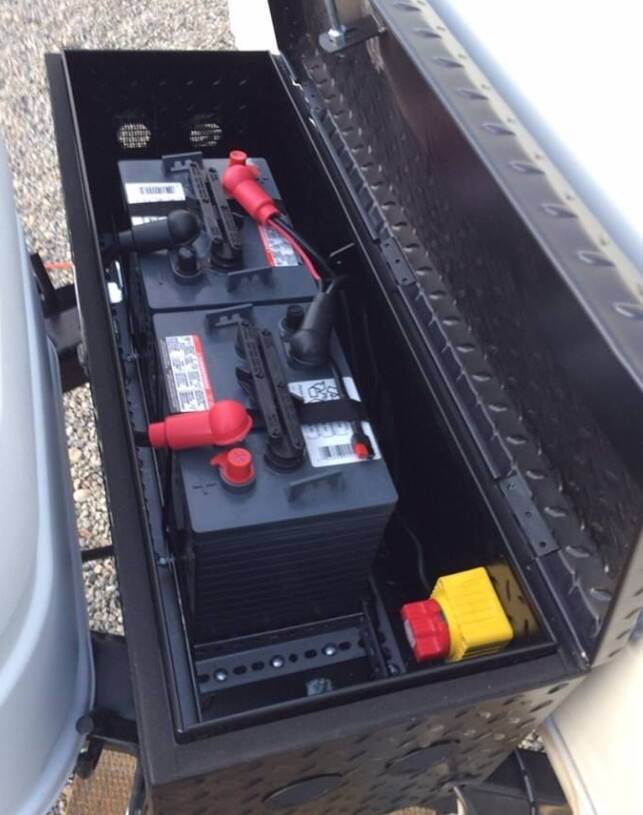
12-Volt DC Power
Your RV's 12-volt direct current (DC) system is powered by your house batteries.
This system operates many of the essential functions inside your RV, including:
- Interior and exterior lighting
- Water pump
- Furnace blower motor
- Ceiling vent fans
- Slide-outs
- Tongue jack
- Stabilizer jacks (on many RVs)
- Control boards for appliances
- Propane detectors
- Carbon monoxide and smoke detectors
Even when you're plugged into campground power, many of these systems are still running on 12-volt power—the batteries are simply being recharged by your RV's converter.
Pro Tip: If your RV lights still work when you're unplugged from shore power, you're using your 12-volt battery system.
120-Volt AC Power
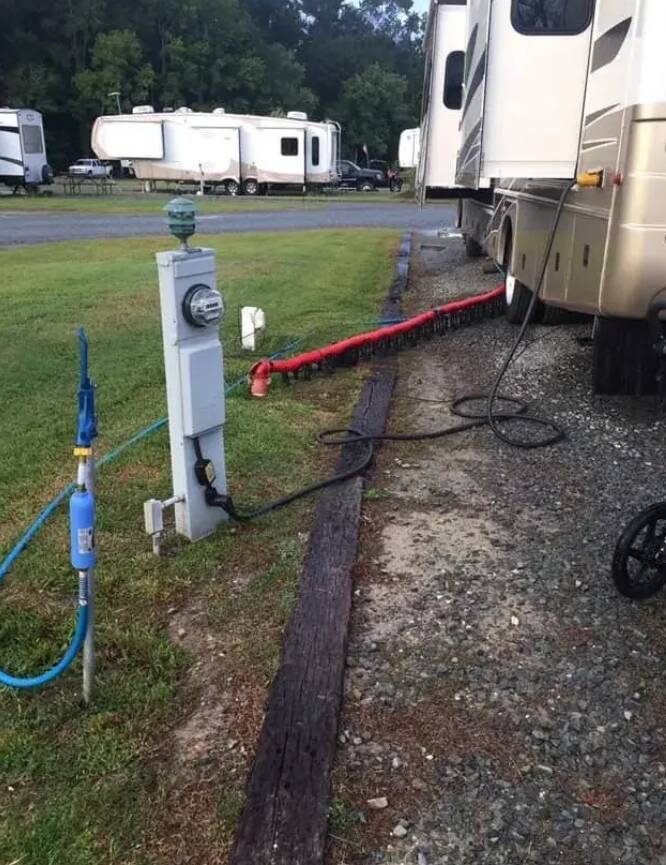
Your 120-volt alternating current (AC) system is similar to the electricity in your home.
This powers higher-demand appliances such as:
- Air conditioner
- Microwave
- Standard household outlets
- Television
- Residential refrigerator (if equipped)
- Electric fireplace
- Coffee maker
- Hair dryer
- Portable heaters
Normally, this power comes from:
- Shore power
- A generator
- An inverter (using battery power)
Without one of these power sources, most household outlets inside your RV won't function.
Why Both Systems Matter
Here's where many new RV owners get confused.
Your batteries don't automatically power everything inside your RV.
Likewise, plugging into campground electricity doesn't mean your batteries are no longer important.
Instead, both electrical systems constantly work together.
When you're plugged into shore power, your converter supplies 12-volt electricity to your RV while also charging your batteries.
When you're disconnected from shore power, your batteries take over the 12-volt system, while any 120-volt appliances require either a generator, an inverter, or another AC power source.
Understanding this relationship helps explain why upgrading one part of your electrical system often affects several others.
Meet the Four Major Components of Your RV Electrical System
Every RV electrical system is built around four primary components working together.
Think of them as a team, with each component performing a different job.
1. Batteries: Your RV's Energy Storage
Your batteries don't create electricity—they store it.
They're the heart of your RV's 12-volt system and supply power whenever you're not connected to an outside electrical source.
The larger your battery bank, the longer you can operate without recharging.
Coming Up: Later in this guide we'll compare traditional lead-acid, AGM, and lithium batteries to help you decide which option best fits your camping style.
2. Converter: Charges Your Batteries
Whenever you're connected to shore power or running a generator, the converter changes 120-volt AC electricity into 12-volt DC electricity.
This allows it to:
- Charge your batteries
- Operate your RV's 12-volt equipment
- Keep your battery bank healthy while plugged in
Many RV owners never realize this component is quietly doing its job behind the scenes every time they're connected to campground power.
3. Inverter: Creates Household Power from Batteries
The inverter performs the opposite job.
It converts 12-volt battery power into usable 120-volt household electricity.
This allows you to run selected household appliances without needing shore power or a generator.
Depending on the size of your inverter and battery bank, you may be able to power items like:
- Laptop chargers
- Coffee makers
- TVs
- CPAP machines
- Small kitchen appliances
Larger inverter systems paired with substantial lithium battery banks can even support residential refrigerators and other high-demand appliances for limited periods.
4. Charging Sources
Finally, your batteries need to be recharged.
That energy typically comes from one or more of the following:
- Shore power
- Solar panels
- Portable or onboard generators
- Your tow vehicle or motorhome alternator
- Portable power stations with charging capabilities
Many modern RV owners use a combination of these charging methods to create a flexible, reliable power system that works in nearly any camping situation.
Recommended Gear
Obviously, having the right components for your power system is crucial to its success. Start with the two most important parts.
A quality surge protector and power cord from Vantecable. This is one of those areas where going cheap is not recommended.
What's Next?
Now that you understand the basic components of your RV's electrical system, it's time to explore where that power actually comes from. In the next section, we'll compare shore power, generators, portable power stations, and charging while driving so you can determine which combination best fits your camping style and travel plans.
More Power Related Articles and Links
- RV Boondocking Guide – when discussing camping without hookups.
- Beating the Summertime Heat in Your RV – when referencing high electrical demands from air conditioners.
- RV Essential Maintenance Guide – when discussing battery maintenance and converter health.
- The Essential Store – after introducing surge protectors, power cords, battery monitors, portable power stations, and other electrical accessories.
Choosing Your RV Power Source
(Shore Power, Generators, Portable Power Stations & Charging While Driving)

Where Does Your RV's Power Come From?
Now that you understand how your RV's electrical system works, it's time to look at the different ways you can actually power your RV.
One of the biggest misconceptions among new RV owners is that there's a single "best" power solution. In reality, most experienced RVers rely on multiple power sources, choosing the one that best fits where they're camping and what they need to power.
For example, when you're staying at a campground with full hookups, you'll likely rely almost entirely on shore power. Spend a weekend boondocking in the mountains, however, and your batteries, solar panels, or a generator become much more important.
The key is understanding what each power source does well—and where its limitations begin.
Let's take a closer look at the most common RV power options.
Shore Power: The Gold Standard for RV Camping
If you've ever stayed at a campground with electrical hookups, you've already used shore power.
Simply put, shore power is electricity supplied directly from the campground or your home. Instead of relying on your RV's batteries, you're connected to an outside electrical source that can continuously power your RV while also charging your battery bank through the converter.
For many RV owners, this is the most convenient and worry-free way to camp.
Benefits of Shore Power
✔ Unlimited electricity while connected
✔ Runs high-demand appliances like air conditioners, microwaves, and electric water heaters
✔ Charges your house batteries automatically
✔ Eliminates concerns about battery drain
✔ Quiet and maintenance-free
Things to Remember
Although shore power is incredibly convenient, it isn't perfect.
Power surges, faulty campground wiring, and low-voltage conditions can damage expensive RV electronics.
That's why one of the smartest investments any RV owner can make is a quality Electrical Management System (EMS) or surge protector.
Think of it as inexpensive insurance for your RV.
Understanding 30-Amp vs. 50-Amp Service
One area that often confuses new RV owners is the difference between 30-amp and 50-amp hookups.
Although they may look similar, they provide significantly different amounts of available power.
30-Amp Service50-Amp ServiceOne 120V hot legTwo separate 120V hot legsApproximately 3,600 watts availableUp to 12,000 watts availableCommon on smaller travel trailersCommon on fifth wheels and larger motorhomesMay require careful appliance managementAllows multiple large appliances simultaneously
If you've ever tripped a campground breaker while running the microwave and air conditioner at the same time, you've probably exceeded your available amperage.
Learning how much power your RV can safely use is one of the most valuable skills you can develop.
Related Reading: Essential RV Accessories Every Camper Should Own.
Generators: Power Wherever You Go
One of the biggest advantages of owning an RV is the ability to camp far beyond traditional campgrounds.
Whether you're parked beside a remote lake, deep in a national forest, or spending several days boondocking on public land, a generator can provide dependable power when hookups aren't available.
Generators create 120-volt electricity much like campground power, allowing you to run many of the same household appliances while also charging your batteries through your RV's converter.
Portable vs. Built-In Generators
There are two primary types of generators used by RV owners.
Portable Generators
Portable generators are extremely popular because they're:
- More affordable
- Easy to replace
- Useful around the home
- Can be positioned away from the RV for reduced noise
- Available in various sizes
Many RV owners choose inverter generators because they're quieter, more fuel efficient, and produce cleaner electricity that's safe for sensitive electronics.
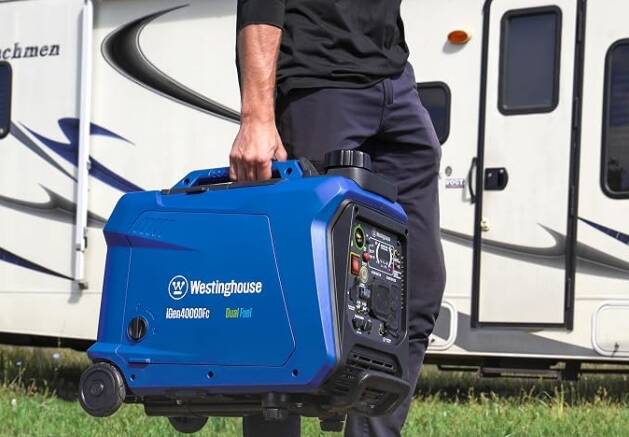
This generator keeps the power on and the noise down! Great for camping or your home.
Westinghouse 4000 Peak Watt Super Quiet Dual Fuel Portable Inverter Generator
Built-In Generators
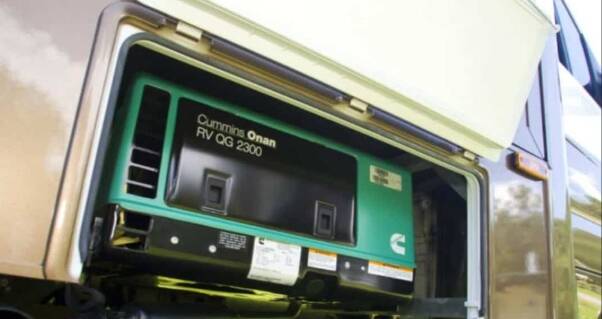
Many Class A motorhomes, diesel pushers, and larger fifth wheels come equipped with onboard generators.
Advantages include:
- Push-button starting
- Larger fuel capacity
- No lifting required
- Convenient during travel
- Permanently installed
The downside is higher purchase cost and increased maintenance requirements.
When Does a Generator Make Sense?
Generators are especially useful when:
✔ Running one or more air conditioners
✔ Recharging depleted batteries quickly
✔ Using high-demand appliances
✔ Camping in cloudy weather when solar production is reduced
✔ Extended off-grid camping
Keep Generator Etiquette in Mind
Although generators are incredibly useful, remember you're sharing the outdoors with others.
Follow campground quiet hours.
Avoid running generators late at night or early in the morning.
Whenever possible, position portable generators away from neighboring campsites while still following the manufacturer's safety recommendations.
A little courtesy goes a long way toward making the camping experience enjoyable for everyone.
Portable Power Stations: Flexible Power Without the Noise
Portable power stations have become one of the fastest-growing segments of the RV industry—and for good reason.
Unlike traditional generators, portable power stations store electricity in an internal battery rather than producing it from gasoline or propane.
They're essentially large rechargeable batteries equipped with multiple power outlets, USB ports, and often built-in inverters.
Many RV owners use them to:
- Charge electronics
- Power CPAP machines
- Run portable refrigerators
- Recharge camera equipment
- Operate Starlink internet systems
- Power small appliances
Because they produce no exhaust and operate almost silently, they're perfect for campgrounds where generators are restricted.
How Are Portable Power Stations Charged?
One of their greatest advantages is flexibility.
Most units can be charged from:
- Shore power
- Solar panels
- Vehicle charging while driving
- Household outlets
- Generators
This makes them an excellent backup power solution even if your RV already has a traditional battery bank.
Are They Right for Every RV Owner?
Not necessarily.
If your RV already has a large lithium battery bank, inverter, and solar system, you may not need a portable power station.
However, they're an outstanding option for:
- Weekend campers
- Tent campers
- Day trips
- Emergency home backup
- Outdoor cooking
- Tailgating
- Beach days
- Running electronics away from the RV
For many newer RV owners, a portable power station offers an easy way to enjoy off-grid flexibility without immediately investing in a complete electrical system upgrade.
Recommended Product
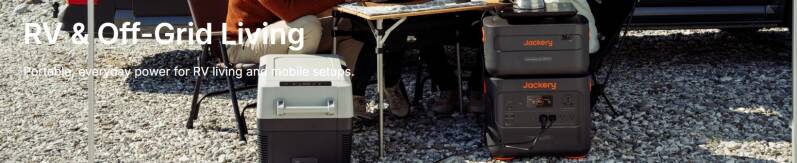
If you're looking for a dependable portable power solution, Jackery has earned a strong reputation among RV owners for reliability, ease of use, and a wide range of capacities. Whether you need enough power to keep phones, laptops, and small appliances running for a weekend or you're looking for a larger unit that can support more demanding equipment, there's likely a model that fits your camping style. They're also an excellent companion to solar panels for quiet, off-grid adventures.
Charging Your Batteries While Driving
Many RV owners don't realize that their batteries are often charging while they're traveling down the road.
Depending on your RV's design, your tow vehicle or motorhome alternator may provide power to your house batteries while the engine is running.
This can help replenish energy used overnight before arriving at your next campsite.
However, there are some important limitations.
Not All Charging Systems Are Equal
The amount of charging provided while driving varies significantly depending on:
- Tow vehicle
- RV manufacturer
- Wiring size
- Battery type
- Charging system
- Distance traveled
For traditional lead-acid batteries, the factory charging system is often sufficient.
However, many RV owners upgrading to lithium batteries discover they need additional equipment to maximize charging performance.
DC-to-DC Chargers
If you're considering lithium batteries—or already have them—you may encounter something called a DC-to-DC charger.
Rather than simply connecting the alternator directly to the batteries, these chargers optimize charging performance while protecting both your alternator and battery bank.
Benefits include:
✔ Faster charging
✔ Proper lithium charging profiles
✔ Better battery health
✔ Improved charging efficiency
For frequent travelers who move every few days, this can be one of the most valuable upgrades available.
Which Power Source Is Best?
The truth is...
Most experienced RV owners don't rely on just one.
Instead, they build a system that matches how they camp.
For example:
Full-Hookup Campers
- Shore power
- Battery backup
- Surge protector
Weekend Travelers
- Shore power
- Portable power station
- Small generator
Boondockers
- Lithium batteries
- Solar
- Generator backup
Full-Time RVers
- Large battery bank
- Solar
- Inverter
- Shore power when available
- Portable backup power
Rather than asking, "What's the best RV power source?", ask yourself:
"Where do I spend most of my time camping?"
The answer will help you determine which combination of power sources makes the most sense for your RV and your budget.
Coming Up Next...
Now that you understand where your RV's power comes from, it's time to look at where that power is stored.
In the next section, we'll compare lead-acid, AGM, and lithium batteries, explain why lithium has become so popular among RV owners, and help you determine how much battery capacity you actually need based on the way you camp.

Understanding RV Batteries
(Battery Types, Capacity, Maintenance, and Choosing the Right Battery for Your Camping Style)

RV Batteries: The Heart of Your RV's Power System
No matter how you choose to power your RV—shore power, solar panels, a generator, or even a portable power station—everything eventually comes back to one critical component:
Your battery bank.
Think of your batteries as your RV's energy storage system. They don't create electricity; they store it until you need it. Whether you're turning on the lights after sunset, running your water pump, charging your phone, or powering an inverter to make a cup of coffee while boondocking, your batteries are working behind the scenes.
Unfortunately, batteries are also one of the most misunderstood parts of an RV. Many new owners assume all batteries are the same or that the biggest battery is automatically the best choice. The reality is that the right battery depends on how you camp, what you power, and how often you're away from hookups.
In this section, we'll explain the different battery technologies, how much capacity you actually need, and why so many RV owners are upgrading to lithium.
The Three Most Common Types of RV Batteries
Today's RV owners generally choose from three battery technologies:
- Flooded Lead-Acid
- AGM (Absorbed Glass Mat)
- Lithium (LiFePO₄)
Each has advantages and disadvantages, and understanding those differences can save you money while ensuring your RV performs the way you expect.
Flooded Lead-Acid Batteries

For decades, flooded lead-acid batteries have been the standard in the RV industry. They're still commonly installed by manufacturers because they're affordable and widely available.
Advantages
✔ Lowest purchase price
✔ Readily available almost anywhere
✔ Proven, reliable technology
✔ Easy to replace while traveling
Disadvantages
✘ Require periodic maintenance
✘ Water levels must be checked regularly
✘ Can release hydrogen gas while charging
✘ Heavy for the amount of usable power
✘ Shorter lifespan than newer battery technologies
✘ Only about 50% of their rated capacity should be used to maximize battery life
For example:
A 100Ah flooded battery really provides about 50Ah of usable energy before it should be recharged.
Best For
- Weekend campers
- RV owners who primarily stay at campgrounds with hookups
- Budget-conscious buyers
- Occasional travelers
AGM Batteries
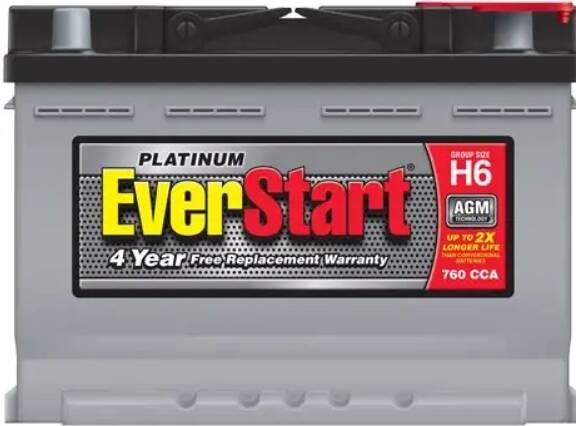
AGM (Absorbed Glass Mat) batteries are an upgraded version of traditional lead-acid batteries.
Instead of liquid electrolyte sloshing around inside, the electrolyte is absorbed into fiberglass mats, making the battery sealed and maintenance-free.
Advantages
✔ Maintenance free
✔ No watering required
✔ Better vibration resistance
✔ Faster charging
✔ Less susceptible to freezing
✔ No acid spills
Disadvantages
✘ Higher purchase price
✘ Still relatively heavy
✘ Shorter lifespan than lithium
✘ Still limited to approximately 50% usable capacity
Best For
- Frequent campers
- Travel trailers
- Motorhomes
- Owners wanting less maintenance without switching to lithium
Lithium Batteries (LiFePO₄)
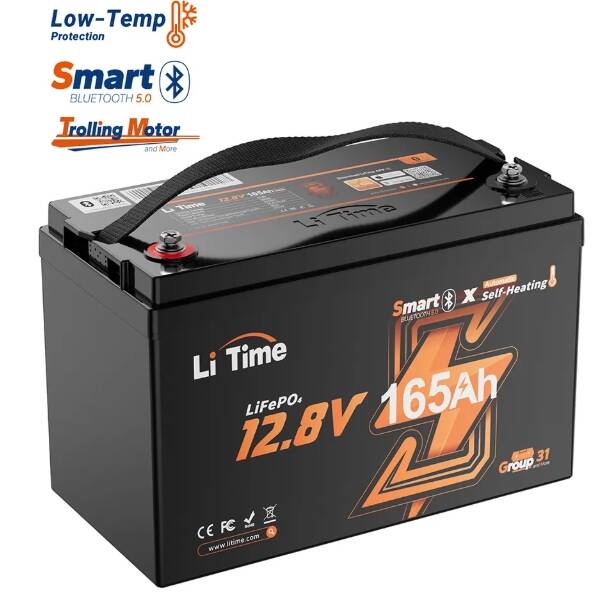
Lithium Iron Phosphate (LiFePO₄) batteries have quickly become the preferred choice for many RV owners—and for good reason.
Although the initial investment is higher, lithium batteries offer significant advantages that often make them the better long-term value.
Why Are So Many RV Owners Switching to Lithium?
Lithium batteries provide:
✔ Nearly 100% usable capacity
✔ Much faster charging
✔ Significantly longer lifespan
✔ Consistent voltage output
✔ Extremely lightweight
✔ Maintenance free
✔ No watering
✔ No acid
✔ Excellent performance for solar systems
Most quality lithium batteries are rated for 3,000–6,000+ charge cycles, compared to only a few hundred cycles for many lead-acid batteries.
That means one lithium battery can potentially outlast several sets of traditional batteries.
Real-World Example
Let's compare two common battery options.
100Ah Lead-Acid Battery
Usable capacity:
Approximately 50Ah
Weight:
Around 60 pounds
Typical lifespan:
3–5 years
100Ah Lithium Battery
Usable capacity:
Nearly 100Ah
Weight:
Approximately 25 pounds
Typical lifespan:
10+ years with proper care
Even though both batteries are labeled "100Ah," the lithium battery provides nearly twice the usable energy while weighing less than half as much.
Recommended Upgrade
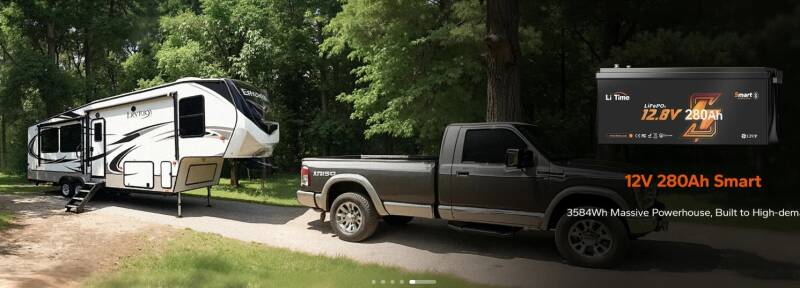
If you're considering upgrading your RV's battery bank, LiTime Lithium Batteries offer an excellent balance of performance, reliability, and value. They provide nearly full usable capacity, charge much faster than traditional batteries, require virtually no maintenance, and are available in a variety of sizes to match everything from weekend travel trailers to full-time off-grid setups.
Related Reading: Must-Install Spring RV Upgrades
Understanding Battery Capacity
One of the most confusing terms you'll hear while shopping for batteries is:
Amp-hours (Ah)
Simply put...
Amp-hours measure how much energy your battery can store.
The larger the number, the longer your battery can power your RV before needing to be recharged.
Think of it like your RV's fuel tank.
A larger fuel tank doesn't make your vehicle faster—it simply lets you travel farther before stopping.
The same idea applies to batteries.
How Much Battery Capacity Do You Really Need?
This is where many RV owners overspend.
Instead of buying the largest battery bank possible, consider how you actually camp.
.
Weekend Campers
Typical electrical use:
- Interior lights
- Water pump
- Phone charging
- Vent fans
Recommended capacity:
100Ah–200Ah
State Park Campers
Typical use:
- Lights
- Water pump
- Coffee maker (through inverter)
- Television
- Small appliances
Recommended capacity:
200Ah–300Ah
Boondockers
Typical use:
- Everything above
- Longer stays
- Inverter use
- Solar charging
Recommended capacity:
300Ah–600Ah
Full-Time RVers
Typical use:
- Residential refrigerator
- Remote work
- Starlink
- Television
- Coffee maker
- Kitchen appliances
- CPAP
- Longer off-grid stays
Recommended capacity:
400Ah–800Ah (or more depending on your needs)
Remember, these are general recommendations. Your actual power needs will depend on the appliances you use, how often you camp without hookups, and how much energy you consume each day.
Battery Monitoring: The Upgrade Most RV Owners Overlook
If there's one inexpensive upgrade that can dramatically improve your battery management, it's a battery monitor.
Many factory-installed battery indicators only provide a rough estimate of your battery's charge level, and they're often inaccurate—especially under load.
A quality battery monitor gives you real-time information such as:
- Battery voltage
- Current draw
- Amp-hours used
- Remaining battery capacity
- Estimated runtime
This helps prevent one of the fastest ways to shorten battery life: repeatedly over-discharging your batteries.
Recommended Items:
Renogy 500A Battery Monitor - This battery monitor is perfect for keeping an eye on your batteries. It's easy to set up and understand.
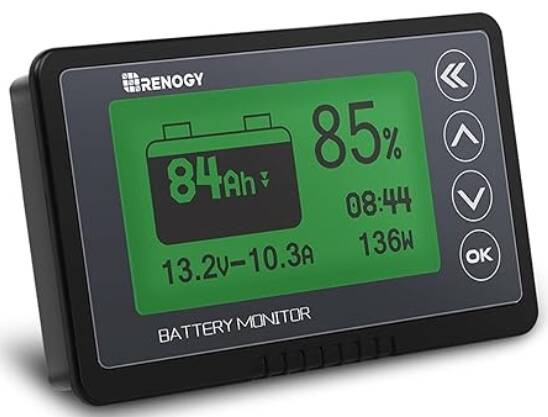
NOCO GENIUS2X2: 4A 2-Bank Smart Battery Charger - Keep your RV batteries charged and ready with the NOCO GENIUS2X2! Perfect for all types of batteries.

Battery Maintenance Tips
Regardless of which battery type you choose, proper maintenance will help maximize performance and lifespan.
Before Every Trip
✔ Inspect battery terminals for corrosion
✔ Check cable connections for tightness
✔ Ensure batteries are securely mounted
✔ Verify battery charge level
✔ Inspect battery compartment for damage or debris
During Camping Season
✔ Recharge batteries promptly after use
✔ Avoid leaving batteries deeply discharged
✔ Monitor charge levels regularly
✔ Keep terminals clean
✔ Inspect cables for wear or damage
During Storage
✔ Fully charge batteries before storing your RV
✔ Disconnect batteries or use a battery disconnect switch if appropriate
✔ Use a compatible maintenance charger when recommended
✔ For lithium batteries, follow the manufacturer's storage recommendations regarding state of charge and temperature
Pro Tip: Even maintenance-free batteries benefit from regular inspections. Catching a loose cable or corroded connection early can prevent frustrating electrical problems later.
Recommended Items:
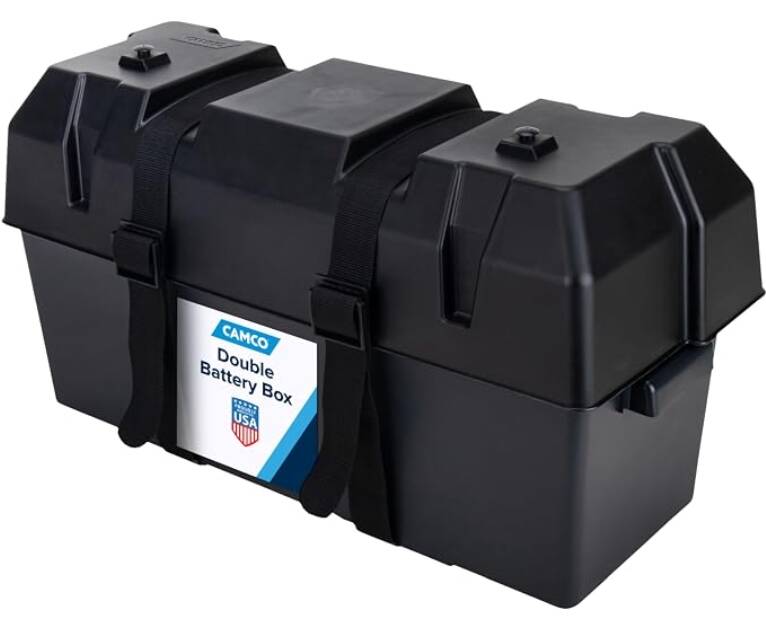
Camco Double Battery Box - Safely Stores RV Batteries - Features a Heavy-Duty Corrosion-Resilient Polymer Construction
Common Battery Myths
Let's clear up a few common misconceptions.
Myth #1: Bigger Batteries Are Always Better
Not necessarily.
The best battery is the one that matches your camping style and power needs.
Myth #2: Lithium Batteries Aren't Worth the Cost
While the upfront investment is higher, their longer lifespan, greater usable capacity, faster charging, and lower maintenance often make them a better long-term value for many RV owners.
Myth #3: You Should Drain Your Batteries Completely Before Recharging
False.
Deeply discharging most battery types can shorten their lifespan. It's generally better to recharge before they become heavily depleted. Follow the manufacturer's recommendations for your specific battery chemistry.
Myth #4: All Battery Chargers Work with Lithium Batteries
Not always.
Some older converters and chargers aren't designed for lithium charging profiles. Before upgrading, verify that your RV's charging system is compatible or determine whether a converter upgrade is recommended.
Myth #5: More Batteries Mean You Never Need Shore Power or a Generator
Additional battery capacity simply allows you to store more energy. Eventually, that stored energy must be replenished through shore power, solar, a generator, your vehicle's charging system, or another charging source.
Choosing the Right Battery for Your Camping Style
There's no universal "best" RV battery—only the best battery for the way you travel.
Weekend Campers
A quality AGM or lithium battery may be all you need.
State Park Travelers
Consider a larger battery bank combined with a small portable power station for added flexibility.
Boondockers
Lithium batteries paired with solar offer longer stays and faster recovery between charges.
Full-Time RVers
A larger lithium battery bank, quality inverter, solar charging, and a battery monitor provide the flexibility and reliability needed for extended travel.
Investing in the right battery system now can make every future camping trip more enjoyable—and often save money by avoiding upgrades that don't fit your actual needs.
Coming Up Next...
Now that you understand how batteries store and deliver power, it's time to explore one of the fastest-growing upgrades in the RV world: solar power.
In the next section, we'll explain how RV solar systems work, compare solar to generators, show how the components fit together, and help you determine whether solar is the right investment for your style of camping.
Solar Power, Building the Right RV Power System, Common Mistakes & Frequently Asked Questions
(Solar, Power Planning, FAQs, Conclusion & Internal Linking Strategy)

Solar Power: One of the Best RV Upgrades You Can Make
If you've spent any time around RV owners or watched camping videos online, you've probably noticed that solar power has exploded in popularity over the past several years.
And it's easy to see why.
Today's solar technology is more efficient, more affordable, and easier to install than ever before. For many RV owners, solar has transformed the way they camp by reducing generator use, extending stays off-grid, and providing a reliable way to recharge batteries almost anywhere the sun shines.
But despite its popularity, solar is also one of the most misunderstood upgrades in the RV world.
Let's clear up some of the biggest misconceptions.
How Does RV Solar Actually Work?
Many people believe that solar panels directly power the appliances inside their RV.
They don't.
Instead, solar panels generate electricity that is used to recharge your battery bank. Your batteries then provide power to your RV's 12-volt systems or, through an inverter, supply 120-volt power to household appliances.
Think of it this way:
The solar panels are the fuel pump.
The batteries are the fuel tank.
Without batteries, the energy collected by your solar panels has nowhere to be stored.
The Four Main Components of an RV Solar System
Understanding solar becomes much easier when you break it down into four simple components.
Solar Panels
Solar panels collect energy from the sun and convert it into electricity.
They can be:
- Roof-mounted
- Portable suitcase panels
- Portable folding panels
- Ground-deployed portable arrays
Portable panels are especially popular among RV owners who often camp in wooded sites because they can be moved into direct sunlight while the RV remains comfortably shaded.
Charge Controller
The charge controller regulates the electricity coming from the solar panels before it reaches your batteries.
Without one, excessive charging could damage your batteries.
There are two primary types:
PWM Controllers
- Lower cost
- Suitable for smaller systems
MPPT Controllers
- Higher efficiency
- Better performance
- Ideal for larger systems
- Excellent for lithium battery setups
Battery Bank
The batteries store the energy collected by the solar panels.
Without sufficient battery capacity, even the largest solar array won't provide the off-grid runtime you're expecting.
That's why battery capacity and solar production should always be planned together.
Inverter
If you want to run standard household appliances while boondocking, you'll also need an inverter.
Without an inverter, your solar-charged batteries can still operate most 12-volt equipment, but your standard 120-volt outlets may not function.
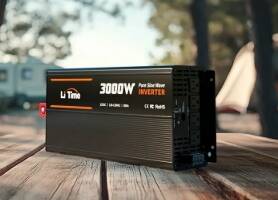
Your RV's inverter plays an important role in your electrical system by converting 12-volt DC power stored in your batteries into 120-volt AC power, which is the same type of electricity used in your home. This allows you to use many of your everyday household appliances when you're not connected to shore power or running a generator. Depending on the size of your inverter and battery bank, you may be able to power items such as televisions, laptops, coffee makers, residential refrigerators, CPAP machines, kitchen appliances, and even some air conditioners for limited periods. Without an inverter, your batteries can still power your RV's 12-volt systems—such as lights, the water pump, furnace fan, and vent fans—but most standard wall outlets inside your RV won't function unless you're plugged into an external power source.
Just as important as choosing the right battery is making sure your inverter is compatible with your electrical goals. If you're upgrading from traditional lead-acid batteries to lithium batteries, don't assume your existing inverter is ready for the change. While many modern pure sine wave inverters work well with lithium battery systems, older inverter/charger combinations may not provide the proper charging profile needed to safely and efficiently charge lithium batteries. In some cases, the inverter itself may work perfectly, but the built-in charger may require reprogramming or even replacement. Before investing in a lithium battery upgrade, verify whether your inverter—or inverter/charger—is lithium compatible, or consult your manufacturer to determine if a firmware update, settings adjustment, or equipment upgrade is recommended. Taking this extra step helps ensure your new batteries perform as intended, charge correctly, and deliver the long lifespan and performance that make lithium such a popular upgrade.
How Much Solar Do You Actually Need?
This is one of the most common questions RV owners ask.
The honest answer is...
It depends on how much electricity you use.
Instead of starting with solar panels, start by estimating your daily power consumption.
Ask yourself:
- Do you simply want lights overnight?
- Are you charging laptops?
- Running Starlink?
- Using a CPAP?
- Watching television?
- Operating a portable refrigerator?
- Running an inverter every morning for coffee?
Once you know your daily power usage, sizing your solar system becomes much easier.
General Solar Guidelines
While every RV is different, these recommendations provide a good starting point.
Weekend Campers
100–200 watts
Ideal for battery maintenance and light electrical use.
Frequent Campers
200–400 watts
Great for charging batteries while enjoying moderate off-grid camping.
Boondockers
400–800 watts
Provides significant charging capability for longer stays without hookups.
Full-Time RVers
600+ watts
Many full-timers combine larger solar arrays with lithium batteries and a generator for maximum flexibility.
Remember, these are only general guidelines. Weather, tree cover, battery capacity, and appliance usage all affect real-world performance.
Solar Isn't Magic
One mistake many first-time buyers make is believing solar eliminates every power limitation.
The reality is that solar production changes throughout the day and is influenced by several factors, including:
- Cloud cover
- Shade
- Panel angle
- Time of year
- Geographic location
- Panel cleanliness
That's why experienced RV owners often build systems with multiple charging options.
Solar handles daily charging.
Generators provide backup when needed.
Shore power is available whenever hookups are available.
Together, they create a reliable and flexible power system.
Generator vs. Solar: Which Is Better?
This is another question with no one-size-fits-all answer.
Both have strengths.
FeatureSolarGeneratorNoiseNearly silentEngine noiseFuel RequiredNoYesMaintenanceMinimalRegular maintenanceOperating CostVery lowOngoing fuel costsWeather DependentYesNoAir Conditioner UseLimited (unless very large systems)ExcellentInitial CostModerate to HighModerateLong-Term CostLowerHigher
For many RV owners, the best solution isn't choosing one over the other—it's combining both.
Solar handles your daily charging needs, while a generator provides peace of mind during cloudy weather or when you need to run high-demand appliances like air conditioners.
Building the Right Power System for Your Camping Style
Rather than asking what everyone else recommends, build your electrical system around your camping habits.
Weekend Campers
If you primarily camp at RV parks with hookups, focus on reliability.
Recommended setup:
- Shore power
- Quality surge protector
- Healthy battery
- Portable power station for convenience
State & National Park Campers
Many public campgrounds provide electricity, but not all.
Recommended setup:
- Battery upgrade
- Portable solar panel
- Portable power station
- Generator (optional)
Boondockers
If camping without hookups is your goal, battery capacity becomes your most valuable resource.
Recommended setup:
- Lithium batteries
- Solar
- Battery monitor
- Inverter
- Generator backup
Full-Time RVers
Your RV is both transportation and home.
Reliability is everything.
Recommended setup:
- Large lithium battery bank
- Solar array
- Quality inverter
- Battery monitor
- Generator backup
- Surge protection
- Portable power station for added flexibility
Ten Common RV Power Mistakes
Avoiding these mistakes can save you hundreds—or even thousands—of dollars over the life of your RV.
1. Buying Equipment Before Understanding Your Needs
Always calculate your power usage first.
2. Ignoring Battery Capacity
Solar doesn't matter if your batteries can't store enough energy.
3. Oversizing Your Inverter
Bigger isn't always better.
Choose an inverter based on the appliances you actually plan to use.
4. Skipping a Surge Protector
One electrical surge at a campground can damage expensive RV electronics.
5. Forgetting About Battery Maintenance
Clean terminals and proper charging significantly extend battery life.
6. Running Batteries Too Low
Deep discharges shorten the lifespan of many battery types.
7. Assuming Solar Runs Everything
Remember...
Solar charges batteries.
Batteries power your RV.
8. Buying Cheap Extension Cords
Always use cords rated for your RV's electrical service.
9. Ignoring Power Consumption
Small appliances add up faster than many RV owners realize.
10. Waiting Until Something Breaks
Preventive maintenance is almost always less expensive than emergency repairs.
Frequently Asked Questions
Can solar panels run my RV air conditioner?
Not by themselves.
Most air conditioners require significant power. Running one from batteries and solar generally requires a large lithium battery bank, substantial solar capacity, and an appropriately sized inverter.
Do I need a generator if I have solar?
Not necessarily.
However, many experienced RV owners keep a generator as a backup during extended cloudy weather or when they need additional power for high-demand appliances.
How many batteries do I need?
It depends entirely on how you camp and how much electricity you use.
Weekend campers often do well with 100–200Ah of battery capacity, while full-time or off-grid RVers may benefit from 400Ah or more.
Can I replace my lead-acid batteries with lithium?
In many cases, yes.
However, you should verify that your converter, charger, and charging system are compatible with lithium batteries before making the switch.
Can I charge my batteries while driving?
Most RVs provide some charging while towing or driving, though the amount varies by manufacturer and setup. Many lithium battery systems perform best with a dedicated DC-to-DC charger.
Should I leave my RV plugged in all the time?
It depends on your RV's charging system and battery type.
Modern smart converters generally manage battery charging well, but it's still a good idea to periodically inspect your batteries and review the manufacturer's recommendations.
Continue Building Your RV Knowledge
If you found this guide helpful, be sure to check out these additional resources here on RV Basic Essentials:
👉 The Ultimate Guide to RV Boondocking – Learn how to camp comfortably without hookups while maximizing your water, waste, and power resources.
👉 Beating the Summertime Heat in Your RV – Discover practical ways to stay cool while reducing unnecessary power consumption during hot weather.
👉 RV Maintenance Guide – Keep your RV in peak condition with seasonal maintenance checklists and preventative maintenance tips.
👉 New to RVing? Start Here! – Explore our beginner-friendly guides covering everything from towing and campground setup to packing essentials and safety.
👉 Visit Our RV Essentials Store – We've assembled many of the products we personally recommend—including surge protectors, lithium batteries, portable power stations, solar accessories, power adapters, battery monitors, and other gear designed to make RV ownership easier and more enjoyable.
Before You Hit the Road...
No matter where your next adventure takes you, taking a little time to understand your RV's power system can pay off for years to come.
The more you know about how your RV stores, uses, and replenishes electricity, the more confidently you'll be able to travel—whether you're plugging into a full-service campground or watching the sunset from a remote campsite miles away from the nearest utility pole.
Safe travels, happy camping, and we'll see you down the road!
Estimate Your Daily RV Power Needs
One of the biggest mistakes RV owners make is purchasing batteries or solar panels before they understand how much power they actually use. The calculator below is designed to give you a general estimate of your daily energy consumption based on the appliances and devices you use during a typical day of camping.
Simply enter approximately how many hours per day you use each item and adjust the quantity if you have more than one. Once you click "Calculate My RV Power Needs," you'll receive an estimate of your daily watt-hour usage, the approximate battery capacity needed, and a recommended solar system size to support that level of power consumption. While the results are estimates and actual usage will vary depending on your equipment and camping conditions, they're an excellent starting point for planning your RV's electrical system with confidence.
RV Power Needs Calculator
Estimate how much battery power you may need for a typical day of RV camping.
| Item | Watts | Hours/Day | Quantity |
|---|
Final Thoughts
Understanding your RV's electrical system may seem intimidating at first, but it doesn't have to be. Once you understand the relationship between shore power, batteries, converters, inverters, solar panels, generators, and your RV's 12-volt and 120-volt systems, you'll be able to make smarter decisions about upgrades, troubleshoot common issues with greater confidence, and get more enjoyment out of every camping trip.
One of the biggest takeaways from this guide is that there is no single "perfect" RV power setup. The best system is the one that's designed around your camping style. A weekend camper who spends most of their time at full-hookup campgrounds has very different power needs than someone who enjoys extended boondocking adventures or works remotely from their RV. By understanding how much electricity you actually use, you can avoid overspending on unnecessary equipment while making sure you have enough power for the adventures you want to take.
Remember, building your RV's power system doesn't have to happen all at once. Many experienced RV owners upgrade over time, starting with the basics and adding components as their camping style evolves. A quality surge protector, healthy battery bank, reliable battery monitor, and a basic understanding of your electrical system can go a long way. As your confidence grows, you may decide to add lithium batteries, solar panels, a larger inverter, or a portable power station to better support the way you travel.
Technology in the RV industry continues to improve every year, making reliable off-grid power more accessible than ever before. Whether your goal is to spend a few peaceful weekends at your favorite state park, enjoy longer boondocking adventures on public lands, or travel the country full-time, investing in the right power solution today will pay dividends in convenience, flexibility, and peace of mind for years to come.
Most importantly, don't feel pressured to buy the biggest battery bank, the largest solar array, or the most expensive inverter simply because someone else has one. Start by understanding your needs, build your system one step at a time, and choose equipment that supports the way you camp. A well-planned RV power system isn't about having the most equipment—it's about having the right equipment.
I hope this guide has helped simplify one of the most important systems in your RV and given you the confidence to make informed decisions about your next upgrade. If you're still exploring your options, be sure to browse the additional resources below. They're designed to help you continue learning, plan your next improvements, and get even more enjoyment out of every adventure.
Safe travels, happy camping, and we'll see you down the road!
Add comment
Comments