

RV PACKING BASICS: HOW TO PACK SMART (WITHOUT OVERPACKING OR FORGETTING ANYTHING)
Packing for an RV trip sounds simple… until you’re standing there wondering if you forgot something important.
Most RVers fall into one of two traps:
- They overpack, filling every cabinet with “just in case” items they never use
- Or they underpack, forgetting critical gear and scrambling once they arrive
The truth is—RV packing isn’t about bringing more… it’s about bringing the right things, for the right trip.
That’s where most people struggle.
This guide will walk you through a smarter way to pack your RV—so you stay organized, avoid stress, and actually enjoy the trip.
THE 5-STEP RV PACKING SYSTEM (THIS CHANGES EVERYTHING)
If you’ve ever stood inside your RV mid-packing thinking…
👉 “I feel like I’m forgetting something…”
👉 “Why do I have so much stuff and still not feel ready?”
You’re not alone.
The problem isn’t that you don’t have a list. We just gave you a FREE one above!
It’s that most RV packing lists don’t actually solve the real issue.
They give you more things to think about… not a better way to think.
And that’s why packing can feel overwhelming—even after you’ve done it a few times.

1. RV SETUP & HOOKUPS (THE FOUNDATION OF EVERY TRIP)
Before you think about comfort, food, or anything else—your RV needs to function properly when you arrive.
This is the category that experienced RVers double-check every single trip, because these are the items that allow you to safely connect, stabilize, and operate your RV at the campsite.
If something is missing here, it’s not just inconvenient—it can completely disrupt your setup.
Think of this as your “arrival readiness” system. These are the items you’ll reach for within the first few minutes of pulling into your site.
What You’re Actually Preparing For
When you pack this category correctly, you’re preparing your RV to:
- Safely connect to campground water without damaging your plumbing
- Manage waste in a clean, controlled way
- Power your RV without risking electrical issues
- Stabilize and level your rig for comfort and safety
This isn’t just gear—it’s infrastructure for your trip.
🔑 Core Essentials to Always Have Ready
- Fresh water hose (drinking safe)
- Water pressure regulator
- Sewer hose + connectors
- Surge protector / EMS
- Power adapters (30/50 amp as needed)
- Leveling blocks + wheel chock
Find These and all the RV Basic Gear that Every RV Needs here - The Essential Store
⚠️ Common Mistakes to Avoid
- Assuming the campground provides everything
- Forgetting adapters for different hookups
- Using cheap or worn-out hoses and connectors
- Not testing equipment before the trip
2. LIVING ESSENTIALS (TURNING YOUR RV INTO A FUNCTIONAL HOME)
This is the category that often determines whether your RV feels comfortable and functional or chaotic and cramped.
A lot of new RVers assume the secret to comfort is bringing more. More dishes, more cookware, more towels, more storage bins, more backup supplies. But in a small space, too much stuff does not create comfort. It creates friction. Cabinets become overloaded, counters disappear, and everyday tasks start taking longer because you are constantly moving things around.
That is why living essentials should be approached with a very specific goal in mind: create a space that supports your routine without overwhelming your RV.
The Right Way to Think About It
Every item in your RV should answer one question:
👉 “Do I use this often enough to justify the space it takes up?”
Because space in an RV isn’t just limited—it’s valuable.
Too many items leads to:
- Overloaded cabinets
- Difficult access to essentials
- Constant shifting and reorganizing
A well-packed RV feels:
✔ Open
✔ Organized
✔ Easy to live in
🔑 Focus Areas That Matter Most
Instead of thinking in terms of “stuff,” think in terms of daily routines:
- Cooking & meal prep 🍳
- Cleaning & maintenance 🧼
- Sleeping & comfort 🛏️
- Bathroom & hygiene 🚿
If your setup supports these well, everything else becomes easier.
💡 Smart Living Essentials (High-Impact, Low-Space)
- Collapsible dish rack
- Nesting cookware set
- Stackable pantry containers
- Microfiber towel sets
- Compact coffee maker (A Must-Have)
We have many of these items Ready to Go in our Essential Store!
⚠️ Where People Overdo It
- Bringing full kitchen setups
- Packing too many dishes and utensils
- Overstocking pantry items
- Carrying duplicates of everything
3. SAFETY & MAINTENANCE (THE DIFFERENCE BETWEEN STRESS AND CONTROL)
This category does not always get the attention it deserves, because it is not the most exciting part of packing. It is much more fun to think about campsite meals, outdoor chairs, and where you are headed than it is to think about emergency supplies, tools, and maintenance basics.
But this category is what keeps small problems from becoming big ones.
Every RVer, sooner or later, runs into something unexpected. A loose connection. A minor leak. A dead battery in a key accessory. A fuse issue. A tire concern. A basic repair that could be solved in five minutes if the right item is on board. These are not unusual situations. They are part of RV life. The difference is whether you are prepared to handle them calmly or forced into a frustrating last-minute search for help or supplies.
The Reality of RV Travel
Even on short trips, you may encounter:
- Loose fittings
- Minor leaks
- Electrical hiccups
- Tire pressure changes
- Small mechanical adjustments
None of these are unusual.
But not being prepared for them? That’s where stress comes in.
🔑 Your “Problem-Solving Kit”
These items don’t take up much space—but they provide massive value:
- Basic tool kit 🔧
- Tire pressure gauge
- Portable air compressor
- First aid kit 🚑
- Flashlight or headlamp
- Spare fuses
⚠️ Common Oversights
- Assuming nothing will go wrong
- Not knowing where tools are stored
- Packing tools but not checking them
- Skipping pre-trip inspections
4. OUTDOOR & CAMP SETUP (WHERE THE EXPERIENCE HAPPENS)
For many RVers, the outdoor space is where the trip comes to life.
Yes, your RV is where you sleep, cook, and reset, but the campsite is often where you actually spend your time. Morning coffee outside. Meals under the awning. Sitting around after dinner. Watching the weather roll in. Visiting with family or fellow campers. Taking in the view. That is the part of RV life many people picture when they dream about getting on the road.
That is why outdoor and camp setup deserves more thought than simply tossing a few things into a storage bay.
At the same time, this is one of the easiest categories to overdo. It is tempting to bring every comfort item, decorative piece, and extra piece of gear that might make the campsite look or feel better. But too much outdoor gear can quickly turn setup into a chore. Suddenly you are unloading, arranging, moving, and repacking far more than necessary. What should feel relaxing starts to feel like work.
The best camp setup is one that supports how you actually like to spend your time. Some RVers want a simple place to sit and relax. Others want to cook outside, entertain, or create a more complete outdoor living space. Neither approach is wrong, but your packing should match your real habits, not an idealized picture of what you think camping should look like.
The Goal of This Category
Create an outdoor space that is:
✔ Comfortable
✔ Functional
✔ Easy to set up
Without turning your campsite into a full production.
⚖️ Finding the Right Balance
Too little:
- You don’t enjoy your space
Too much:
- Setup becomes overwhelming
- Teardown becomes frustrating
The sweet spot?
👉 Simple comfort that you’ll actually use every day
🔑 Outdoor Essentials That Deliver the Most Value
- Folding camp chairs
- Outdoor RV mat
- LED string lights ✨
- Portable grill or griddle
- Small folding table
⚠️ Where People Go Wrong
- Bringing too much “decor”
- Overbuilding the campsite setup
- Packing items they rarely use
- Turning setup into a time-consuming process
5. PERSONAL & TRIP-SPECIFIC ITEMS (WHERE OVERPACKING HAPPENS FAST)
This is the category where good intentions often turn into clutter.
It usually starts with reasonable thinking. You want enough clothes. Enough food. Enough personal items. Enough extras so you are not caught without something important. But because this category feels so open-ended, it is also the place where packing can get out of control the fastest.
A few extra shirts turns into too many clothes. A few backup pantry items become an overloaded kitchen. A few “just in case” items slowly take over cabinets, drawers, and storage areas. Before long, your RV is full, but not necessarily better prepared.
That is why this category needs boundaries.
The key is to pack for the trip you are actually taking, not every possible scenario that could happen between departure and return. Think about where you are going, what the weather looks like, how long you will be away, what activities you have planned, and how easy it will be to restock if needed. Most trips do not require you to prepare for every possibility. They require you to prepare well enough to travel comfortably and adapt as needed.
The Rule That Fixes Overpacking
👉 Pack for the trip you’re taking—not every possible situation.
That one mindset shift changes everything.
🔑 Build Around These Factors
Before packing, always consider:
- Weather conditions ☀️🌧️
- Trip length
- Planned activities
- Access to stores
💡 Smart Packing Strategies
- Pack outfits, not random clothing
- Plan meals ahead of time
- Limit “just in case” items
- Leave extra space (you’ll thank yourself later)
⚠️ Biggest Mistakes in This Category
- Packing too many clothes
- Bringing excessive food
- Duplicating items unnecessarily
- Filling every available storage space
🔑 The End Result
When done right, this category gives you:
✔ More space
✔ Less clutter
✔ A more enjoyable RV experience
First Aid Kit
Safety first! Packing a well-stocked first aid kit is vital for any RV trip, ensuring you're prepared for minor injuries and health issues that may arise on the road.
Essential items like adhesive bandages and antiseptic wipes handle cuts and scrapes, while gauze pads and medical tape are crucial for more significant wounds. Including over-the-counter medications such as pain relievers, antihistamines, and anti-nausea tablets can address common ailments like headaches, allergies, and motion sickness.
Tools like tweezers, scissors, and a digital thermometer provide practical assistance for various situations.
By having a comprehensive first aid kit, you ensure safety and peace of mind, allowing you to fully enjoy your adventure.

HOW TO PACK BASED ON YOUR TRIP TYPE
Not all RV trips are created equal—and your packing shouldn’t be either.
This is one of the biggest gaps in most packing guides. They give you a general list, but they don’t account for the reality that a quick weekend getaway, a full hookup campground stay, and an off-grid boondocking trip all require different levels of preparation.
If you pack the same way every time, one of two things usually happens:
👉 You bring way too much and deal with clutter
👉 Or you forget key items that actually matter for that specific trip
The smarter approach is to adjust your packing based on how and where you’re traveling.
Once you start doing this, packing becomes more intentional—and a whole lot easier.
🏕️ Weekend Trips (KEEP IT SIMPLE AND EFFICIENT)
Weekend trips are meant to be easy. They’re your chance to get out, relax, and enjoy RV life without turning it into a full-scale operation.
But this is where many RVers accidentally overpack the most.
Because the trip is short, there’s a tendency to throw in extra items “just in case.” Before you know it, your RV is packed like you’re heading out for a week-long adventure—when in reality, you’ll only use a fraction of it.
The better approach is to focus on efficiency.
You don’t need backup plans for everything—you just need enough to comfortably get through a couple of days. Keep meals simple, pack clothing based on the weather, and make sure your core setup gear is ready to go.
🔑 Weekend Trip Focus
- Keep meals quick and simple 🍳
- Pack only what you’ll realistically use
- Stick to weather-appropriate clothing
- Double-check your hookup essentials
💡 Pro Tip
Weekend trips are the perfect time to refine your packing system.
Pay attention to what you use—and what you don’t. Over time, this helps you dial in a more efficient setup for longer trips.
🔌 Full Hookup Campgrounds (COMFORT WITHOUT OVERDOING IT)
Full hookup camping is where RV life feels the most relaxed.
You have reliable access to:
✔ Water
✔ Power
✔ Sewer
Which means you can shift your focus away from survival and toward comfort and convenience.
But there’s still a balance to strike.
Just because you can bring more doesn’t mean you should.
How Your Packing Strategy Changes
With full hookups, you don’t need to worry as much about conserving resources. That opens the door to:
- More comfortable cooking setups
- A slightly expanded outdoor space
- A few extra convenience items
But the goal is still the same:
👉 Keep things simple enough that setup and teardown stay easy.
🌲 Boondocking / Off-Grid Trips (PACK WITH PURPOSE)
Boondocking is where RV packing shifts from convenience… to strategy.
When you’re off-grid, your RV isn’t just where you stay—it becomes your entire support system.
There are no hookups to fall back on.
No quick fixes at the pedestal.
No easy reset if you forgot something important.
Everything you need for:
- Water
- Power
- Food
- Comfort
…has to already be with you.
And that’s what makes packing for boondocking different.
🧠 Why This Requires a Different Mindset
In a traditional campground, missing an item is usually just an inconvenience.
You can:
- Borrow from a neighbor
- Run to a nearby store
- Adjust your setup easily
But when you’re boondocking, those options may not exist.
That means your packing isn’t just about comfort—it directly affects:
👉 How long you can stay
👉 How comfortable you are
👉 How much you enjoy the experience
This is why experienced boondockers don’t just pack more…
They pack smarter.
🔑 Think in Systems, Not Just Gear
Boondocking works best when you think in terms of resource systems, not individual items.
Instead of asking:
👉 “Did I pack enough stuff?”
You start asking:
👉 “Do I have a system for managing water, power, and daily life?”
💧 Water Management (YOUR MOST LIMITED RESOURCE)
Water is usually the first thing that limits how long you can stay off-grid.
You’re working with:
- Fresh water tank capacity
- Gray/black tank limits
- Daily usage habits
💡 Smart Water Strategies
- Bring an extra water container for backup
- Use low-flow shower habits 🚿
- Wash dishes efficiently (don’t let water run)
- Use paper plates occasionally to reduce cleanup
👉 Small changes here can extend your trip by days.
⚡ Power Management (CONTROL YOUR USAGE)
Power is the second major factor—and one that catches a lot of RVers off guard.
Without hookups, everything runs off:
- Battery power
- Solar (if equipped)
- Generator (if available)
💡 Power-Smart Packing
- LED lighting (low energy draw)
- Portable power stations
- Solar panels or solar kits ☀️
- Battery monitor (to track usage)
⚠️ Common Mistake
Using power like you’re plugged in.
👉 That drains batteries fast and cuts your trip short.
⚠️ Common Boondocking Mistakes
- Underestimating water usage 💧
- Draining batteries too quickly ⚡
- Overpacking inefficient gear
- Not planning meals ahead
- Forgetting that simplicity is key
WANT THE FULL SYSTEM? (CHECKLIST + APP)
This page is designed to help you pack smarter and think through the categories that matter most. It should make the process easier, help you avoid common mistakes, and give you a stronger foundation for every trip you take.
But let’s be honest.
Even when you understand the process, it is still easy to forget something when you are loading up, trying to leave on time, juggling campground details, and thinking about everything else that goes into an RV trip. That is exactly why having a repeatable system matters so much.
You can absolutely build your own packing routine from the information on this page. Many RVers do. But having a complete, ready-to-use checklist system saves time, reduces stress, and takes the guesswork out of the process. Instead of relying on memory or rebuilding a list every time, you have a dependable structure you can use trip after trip.
That is where our RV checklist system comes in.
✅ THE RV BASIC ESSENTIALS CHECKLIST SYSTEM
Instead of one giant overwhelming list, we created a more practical approach built around the way RV trips actually happen.
Our checklist system helps you move through the trip in stages, so you are not just thinking about what to pack, but also what to do before you leave, when you arrive, and when it is time to head home.
That includes tools like:
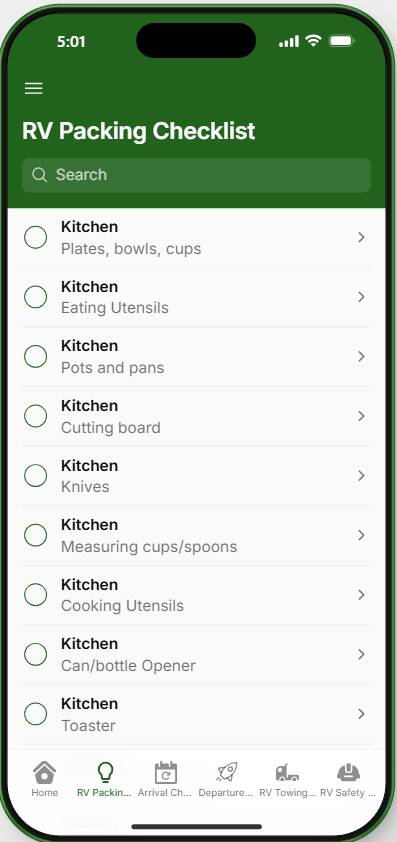
✔ A packing checklist to help you gather the basics without second-guessing yourself
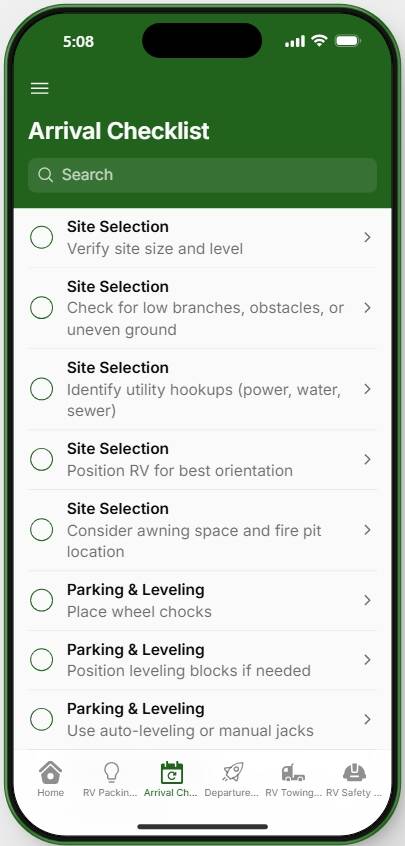
✔ An arrival checklist to make setup smoother and more organized
✔ A departure checklist to help you leave without missing key steps
✔ Towing and safety checklists for added confidence on the road
✔ Additional specialty checklists that support different parts of RV life
This is where the page and the checklist work together. The page teaches the mindset. The checklist gives you the practical tool.
📱 USE IT ON THE GO WITH THE CHECKLIST APP
For many RVers, a printable checklist is helpful. But what makes a real difference is having your system with you when and where you actually need it.
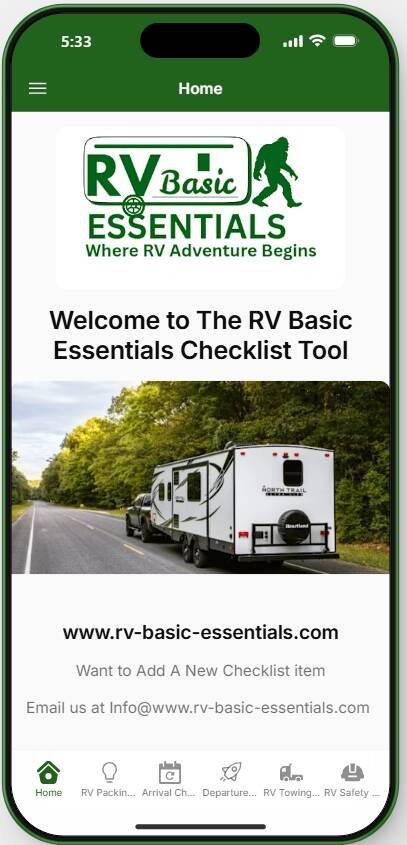
That is why the checklist system is also available in our mobile-friendly checklist app.
Inside the app, you can keep your checklists in one place, pull them up from your phone, and work through them in real time whether you are packing in the driveway, setting up at the campsite, or getting ready to leave. It is designed to make the process feel simpler, not more complicated.
Instead of digging through notes, screenshots, or loose papers, you have a cleaner system that is easier to follow and easier to reuse.
The app is especially helpful if you want a more organized way to manage multiple parts of RV travel, because packing is only one piece of the bigger picture. Once you start using checklists for setup, departure, towing, safety, and seasonal needs, it becomes much easier to stay ahead of the details.